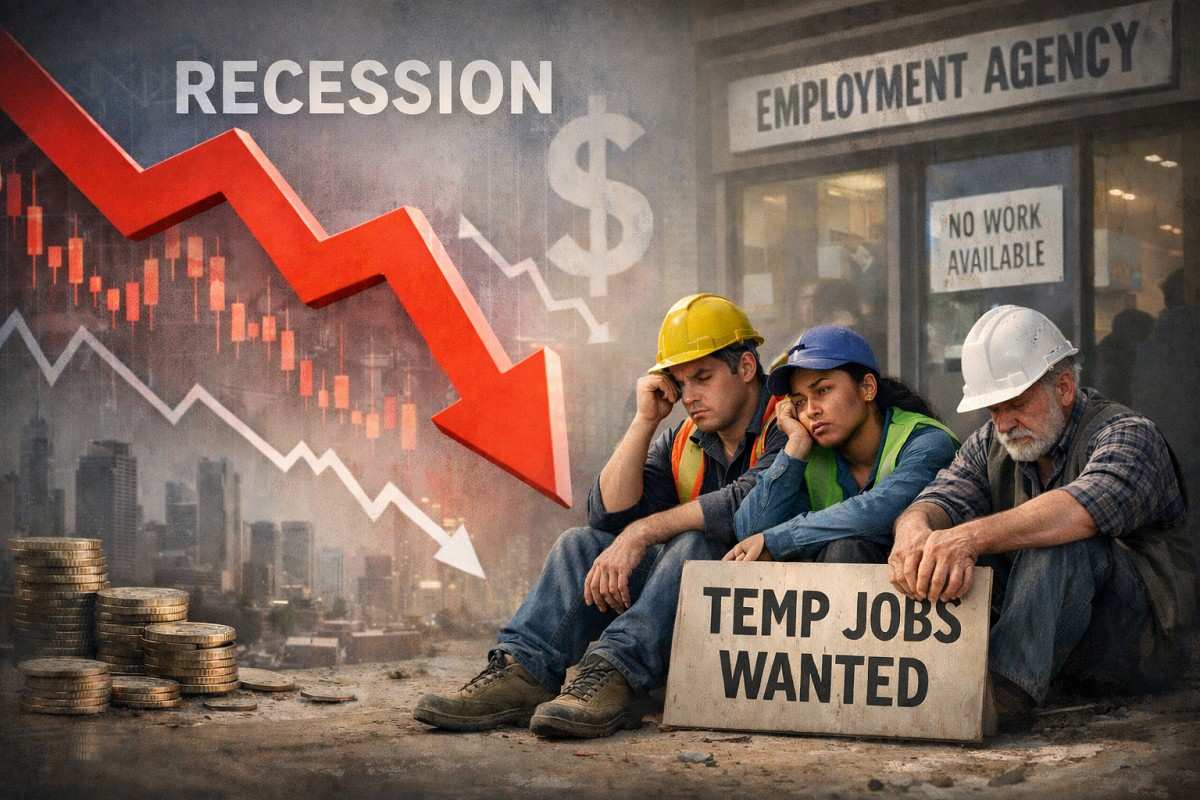
Economic slowdowns bring uncertainty for both businesses and workers. As markets tighten and consumer spending declines, companies are forced to reassess their budgets and priorities.
Hiring is often one of the first areas affected, particularly temporary labour demand. Unlike permanent positions, temporary roles tend to fluctuate quickly during downturns, as businesses rely on short-term contracts to control costs, adapt to changing workloads, and reduce financial risk.
This guide will cover the key causes and effects of shifting temporary labour demand during economic slowdowns, along with practical strategies to manage staffing effectively.
You’ll also discover how flexible workforce planning can help maintain productivity while keeping overhead costs under control.
Understanding Temporary Labour Demand
Temporary labour demand refers to the need for short-term, contract, seasonal, or project-based workers. These workers support businesses during peak periods, special projects, or unexpected workload spikes.
Industries That Rely on Temporary Workers
Several sectors depend heavily on temporary staffing solutions:
- Construction and infrastructure
- Warehousing and logistics
- Seasonal retail
- Manufacturing
- Hospitality and events
- Healthcare support services
Employment trends often shift quickly in flexible work segments during economic changes. Temporary roles tend to expand during growth periods and contract during recessions.
Why Temporary Labour Is Sensitive to Economic Cycles
Temporary workers are often tied to:
- Project-based work
- Seasonal demand
- Expansion initiatives
- Short-term operational needs
When revenue slows, businesses pause new projects or scale down production. This directly reduces temporary labour demand. Unlike permanent staff, temporary roles can be adjusted quickly, making them more vulnerable during downturns.
Historical Context
During the 2008 global financial crisis, temporary employment declined sharply before permanent employment figures changed. However, temporary hiring also rebounded faster during recovery. This pattern shows how temporary staffing acts as both a leading and lagging indicator of economic performance.
Impact Of Economic Slowdowns On Temporary Labour Demand
1. Reduced Hiring Budgets
When profits shrink, companies focus on cash flow. Short-term staffing is often the first expense reviewed.
Common outcomes include:
- Delayed projects.
- Reduced overtime.
- Paused expansion plans.
- Lower recruitment spending.
This can affect productivity if not managed carefully. Businesses that cut too deeply may struggle to ramp up operations once conditions improve.
2. Shift in Industry Priorities
Not all sectors respond the same way to economic pressure. Essential services such as healthcare, logistics, and food supply often maintain stable hiring levels. In contrast, discretionary sectors like events or luxury retail may see sharp declines.
As priorities shift, temporary labour demand varies by industry. Companies must evaluate their sector-specific risks rather than relying on broad economic headlines.
3. Increase in Workforce Flexibility Needs
Interestingly, some businesses actually rely more on temporary staffing during uncertain periods. Rather than committing to permanent hires, they opt for short-term contracts to manage risk effectively. The benefits include:
- Avoiding long-term salary and benefit commitments.
- Quickly adjusting workforce size as needed.
- Responding efficiently to unpredictable market demand.
In this way, temporary staffing transforms from a cost burden into a strategic tool for maintaining operational flexibility.
Regional and Sector-Specific Effects
Economic slowdowns do not affect all regions equally.
Urban vs. Rural Impact
Urban centres with diversified economies may maintain steady temporary hiring across sectors like logistics and healthcare. Rural areas that depend on seasonal industries, such as agriculture or tourism, often experience sharper fluctuations.
Seasonal Industry Vulnerability
Industries such as retail and hospitality are highly seasonal. During downturns, businesses may:
- Shorten peak hiring windows.
- Reduce seasonal headcount.
- Automate certain tasks.
High-Demand Sectors During Slowdowns
Some sectors maintain or even increase temporary Labour during recessions:
- Warehousing and e-commerce fulfillment
- Healthcare and aged care
- Essential manufacturing
- Infrastructure projects
These industries rely on flexible workforce models to meet steady or shifting demand.
The Benefits of Temporary Labour During Economic Downturns
Although downturns reduce hiring overall, temporary Labour still offers key advantages.
Cost Control
Temporary workers allow businesses to:
- Reduce benefit expenses.
- Limit long-term liabilities.
- Control payroll commitments.
This is especially valuable when revenue forecasts remain uncertain.
Operational Flexibility
Companies can scale teams up or down based on:
- Order volumes
- Project timelines
- Seasonal trends
This agility supports business continuity without permanent restructuring.
Risk Reduction
Short-term contracts reduce financial exposure. Employers can test new markets or service lines without committing to permanent hires.
When used strategically, temporary staffing solutions become a safeguard against volatility.
How Employers Can Prepare for Fluctuating Temporary Labour Demand
Economic cycles are unavoidable, and preparation is key.
1. Workforce Forecasting
Use historical sales data, industry reports, and economic indicators to anticipate staffing needs. Scenario planning helps businesses respond quickly.
2. Maintain Staffing Partnerships
Strong relationships with agencies ensure access to qualified workers when demand rebounds. Reliable partners can shorten recruitment cycles and reduce onboarding time.
3. Cross-Training Employees
Cross-training improves internal flexibility. Employees who can perform multiple roles reduce reliance on urgent external hires.
4. Monitor Labour Market Trends
Track:
- Regional unemployment rates
- Sector hiring reports
- Government infrastructure spending
Staying informed supports better decision-making around strategies for managing temporary staffing.
The Role of Staffing Agencies in Supporting Businesses
Staffing agencies play a crucial role during economic uncertainty.
Access to Skilled Workers
Agencies maintain pools of pre-screened candidates ready for deployment. This reduces time-to-hire and ensures continuity.
Reduced Recruitment Costs
Outsourcing recruitment lowers advertising, screening, and onboarding expenses.
Compliance Support
Temporary contracts must meet labour regulations. Agencies handle payroll processing, workplace safety compliance, and employment documentation.
How Hire Labour Can Help
Hire Labour supports employers by providing:
- Reliable temporary staffing solutions.
- Fast placement of qualified workers.
- Flexible contract options.
- Compliance and payroll management.
Partnering with a trusted staffing agency allows companies to manage labour demand without unnecessary risk.
Wrap Up
Economic slowdowns reshape hiring patterns across industries. Temporary labour demand often declines first, yet it also recovers quickly during economic rebounds. Businesses that understand this cycle can plan proactively rather than react defensively.
By forecasting workforce needs, maintaining agency relationships, and adopting flexible staffing models, employers can stay productive while controlling costs. Temporary staffing is not just a short-term fix; it is a strategic advantage in uncertain times.
If your business is navigating changing workforce needs, partner with Hire Labour today for flexible, reliable staffing services tailored to your industry.
FAQs
1. How do economic slowdowns affect temporary staffing?
Economic downturns often reduce short-term hiring first as companies cut costs. However, some sectors increase temporary contracts to maintain flexibility.
2. Which industries maintain temporary labour demand during recessions?
Healthcare, logistics, essential manufacturing, and infrastructure projects typically maintain steady demand even during slowdowns.
3. How can businesses prepare for changes in temporary labour demand?
Employers should use workforce forecasting, cross-training, and strong staffing partnerships to manage fluctuations effectively.
4. Why should I use a staffing agency during economic uncertainty?
Staffing agencies reduce recruitment costs, provide compliance support, and give fast access to skilled temporary workers.
5. Is temporary staffing a long-term solution?
Temporary staffing can support both short-term projects and long-term workforce strategies by improving operational flexibility and reducing financial risk.