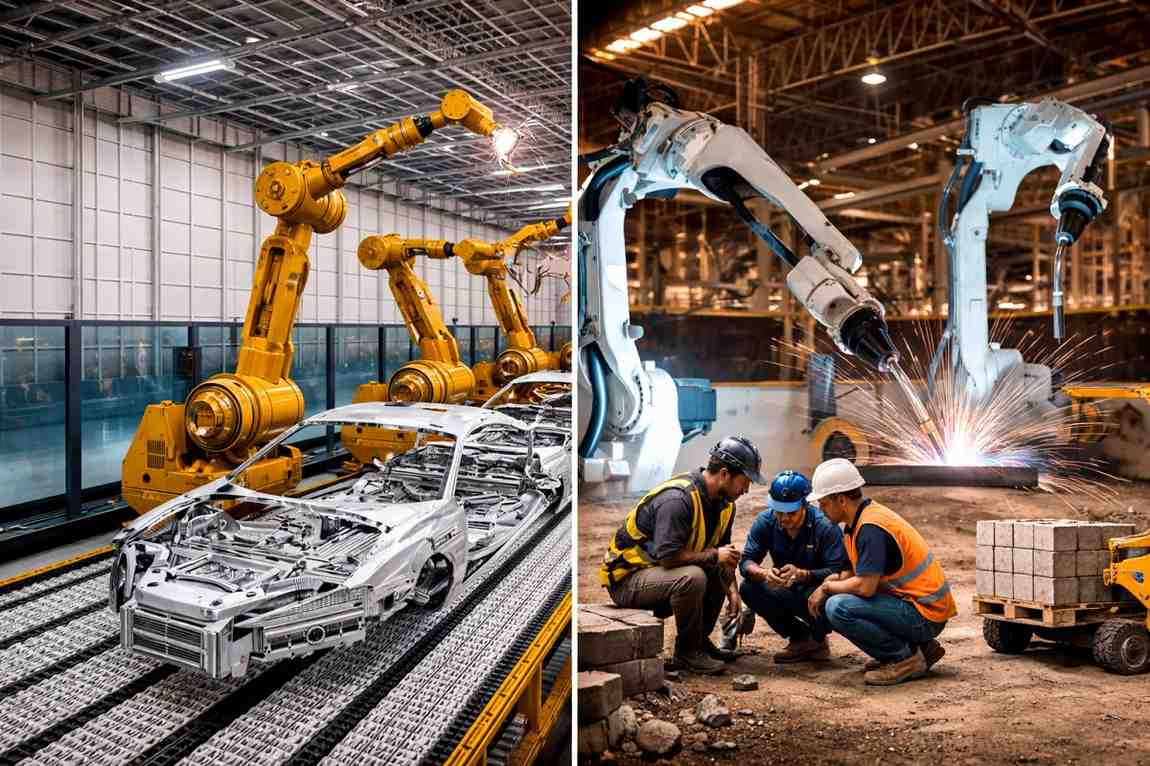
Technology is transforming industries at an extraordinary pace. One of the most significant innovations shaping modern workplaces is robotics in construction and manufacturing. From automated bricklaying machines to robotic welding systems, robotics is helping businesses improve efficiency, accuracy, and workplace safety.
While some fear that robots may replace workers, the reality is that automation is changing the nature of jobs rather than eliminating them. Companies now focus on human–robot collaboration, ensuring that employees handle creative and decision-making tasks while robots manage repetitive or hazardous operations.
This guide explores the rise of robotics in construction and manufacturing and what it means for businesses, employees, and staffing needs in 2026.
What Is Robotics in Construction and Manufacturing?
Robotics refers to the field of technology that involves automated machines designed to perform tasks traditionally done by humans. These machines operate with precision, speed, and minimal human intervention, making them ideal for repetitive, hazardous, or labor-intensive jobs.
Common Applications
In construction, robotic bricklaying speeds up wall assembly while maintaining consistent precision, reducing human fatigue. Automated excavation equipment improves accuracy in digging and grading tasks, minimizing errors and project delays.
3D printing of buildings allows rapid construction of complex structures with minimal waste. Robotic demolition systems safely handle hazardous tear-down tasks, protecting workers from injury.
In manufacturing, robotic welding ensures uniform, high-quality joints at high speed. Automated assembly lines streamline production, reducing manual errors. Quality inspection robots detect defects quickly, maintaining consistent standards.
Packaging and material-handling robots optimize logistics by moving products efficiently while lowering operational costs.
Fact: The global industrial robotics market is expected to exceed $75 billion by 2026, with construction and manufacturing sectors driving much of the growth.
Why Robotics Is Growing Rapidly in These Industries
Labour Shortages
Many industries face shortages of skilled labour, particularly in construction labour staffing. Robotics helps businesses maintain productivity despite workforce gaps, ensuring projects meet deadlines.
Increased Productivity
Robots can operate 24/7 with minimal downtime, allowing faster project completion and higher throughput in manufacturing lines.
Improved Workplace Safety
Automation allows machines to handle dangerous tasks such as welding, heavy lifting, or working in hazardous environments, reducing workplace injuries.
Technological Advancements
Artificial intelligence (AI) and machine learning are making robots smarter, adaptable, and more efficient, allowing them to learn complex tasks and collaborate safely with humans.
Insight: Companies adopting robotics report a 20–30% increase in operational efficiency within the first year of implementation.
Benefits of Robotics in Construction and Manufacturing
| Benefit | Explanation | Example |
| Higher Efficiency | Repetitive tasks are completed faster with consistent quality. | Robotic bricklayers can lay 1,000+ bricks per day. |
| Reduced Operational Costs | Less reliance on manual labor reduces long-term expenses. | Automated assembly reduces labor costs by up to 25%. |
| Improved Quality and Precision | Minimizes human error and maintains production standards. | Welded components meet exact tolerances consistently. |
| Enhanced Worker Safety | Robots handle hazardous tasks. | Demolition robots reduce onsite accidents. |
Challenges of Robotics Adoption
- High Initial Investment: Robotics systems require significant upfront capital.
- Workforce Skill Gap: Employees need training to operate and maintain automated systems.
- Integration Challenges: Businesses must adapt their workflows to enable effective robotics deployment.
- Job Transition Concerns: Workers may shift to technical or supervisory roles, requiring reskilling.
Insight: While upfront costs can be high, ROI is often achieved within 3–5 years through increased productivity and reduced workplace incidents.
How Robotics Is Changing Jobs, Not Replacing Them
- New Job Opportunities: Robotics technicians, automation engineers, maintenance specialists, and data operators are increasingly in demand.
- Human–Robot Collaboration: Robots manage repetitive tasks, while humans focus on problem-solving and strategic work.
- Upskilling the Workforce: Companies invest in training programs to prepare employees for technology-driven workplaces.
Fact: A 2025 study found that companies integrating robotics saw a 15% increase in technical roles, while manual-labor positions shifted to supervisory or hybrid roles.
What This Means for Businesses and Labour Hiring
Increased Demand for Skilled Workers
Employers will prioritize workers who understand both practical operations and emerging technologies.
Importance of Staffing Solutions
Businesses increasingly rely on staffing partners to source qualified personnel with experience in robotics, AI, or automated systems.
Role of Recruitment Agencies
Staffing agencies, such as specialized construction and manufacturing firms, help companies fill roles that require both technical expertise and operational knowledge.
Insight: Partnering with a manufacturing staffing agency can reduce hiring time by up to 40%, ensuring critical projects remain on schedule.
The Future of Robotics in Construction and Manufacturing
- Greater adoption of automation technologies across sectors.
- Integration of AI-powered robotics for smarter, adaptive operations.
- Increased collaboration between human workers and machines.
- Higher demand for technically skilled labour to operate, maintain, and optimize robotics.
Fact: By 2026, over 50% of mid- to large-sized manufacturing facilities are projected to use some form of industrial robotics for core production tasks.
Wrap Up
The rise of robotics in construction and manufacturing is transforming how projects are completed and products are produced. Automation is improving efficiency, accuracy, and workplace safety while enabling businesses to meet growing industry demands. Rather than replacing workers, robotics is reshaping roles and creating opportunities for skilled professionals who can work alongside advanced technologies.
As industries continue to evolve, companies that embrace innovation and invest in workforce development will remain competitive and prepared for the future.
If your business is adapting to new technologies and requires skilled professionals, Hire Labour is here to help. Our expert recruitment services connect construction and manufacturing companies with qualified, job-ready talent who can thrive in modern, technology-driven workplaces.
Get in touch with us today and build a stronger workforce for the future.
FAQs
What is robotics in construction and manufacturing?
Robotics refers to the use of automated machines to perform tasks traditionally done by humans, such as bricklaying, welding, or assembly.
Will robotics replace workers in these industries?
No. Robots handle repetitive or hazardous tasks, while humans take on supervisory, technical, and problem-solving roles.
What are the benefits of robotics in construction?
Improved efficiency, precision, workplace safety, and reduced dependency on labour.
How does robotics help manufacturing companies?
By automating assembly lines, quality inspections, and packaging, robotics increases productivity and reduces errors.
How can businesses adapt to automation?
Invest in employee training, integrate robotics gradually, and partner with staffing agencies for skilled technical hires.