The modern labour market is evolving faster than ever in 2026. Automation, digital tools, stricter safety rules, and changing employer needs are reshaping how labour jobs work.
According to the World Economic Forum’s Future of Jobs Report 2025, employers expect major workforce shifts through 2030, with technology and new skills playing a central role.
Traditional single-skill roles are becoming less stable. Workers who can operate equipment, follow safety standards, use digital scheduling tools, and communicate well on-site are more valuable.
This is where Skill Stacking becomes the future of employability for labour workers and a practical advantage for employers.
In this blog, we will explore what skill stacking is, why it matters in 2026, its key benefits, the most valuable skills to stack, employer benefits, challenges, and its future outlook in the labour industry.
What Is Skill Stacking?
Skill stacking means combining multiple complementary abilities instead of relying on a single job skill. For example, a warehouse worker may combine forklift operation, workplace safety training, inventory software usage, and team communication skills.
It is different from specialization. A specialist develops deep expertise in one area, while a skill-stacked worker builds a practical mix of skills that can be applied across different tasks, shifts, and job sites, making them more adaptable and employable.
Why Skill Stacking Matters in 2026
Labour industries are changing quickly. Construction, logistics, manufacturing, warehousing, and facility services are all adopting automation, digital tracking, and smarter equipment.
Employers now prefer multi-skilled workers because they reduce downtime and improve flexibility. A worker who can handle tools, read safety instructions, update a time-tracking app, and support a team lead is easier to place and promote.
Job markets are also more competitive. Workers who keep learning can move between roles more easily and stay useful when demand changes.
Key Benefits of Skill Stacking for Labour Workers
Higher Employability
The biggest advantage is access to more jobs. A worker with several useful skills can qualify for roles in warehouses, construction sites, factories, maintenance teams, and logistics operations.
This is one of the main benefits of skill stacking for labour workers: it widens your options instead of locking you into one narrow role.
Better Wages and Advancement
Multi-skilled workers often have greater earning potential because they add more value to employers. A general labourer who adds equipment handling, safety tickets, and basic digital skills may become eligible for lead hand, supervisor assistant, or specialized site roles.
Job Security in Changing Markets
When companies introduce new tools or reorganize teams, single-skill workers may face a higher risk. Workers with broader abilities are easier to retrain, reassign, and retain.
Career Flexibility
Stackable skills make it easier to move from one industry to another. A worker with safety awareness, equipment experience, and communication skills can transition from warehousing to construction, manufacturing, or logistics with less friction.
Most Valuable Skills to Stack in Labour Jobs
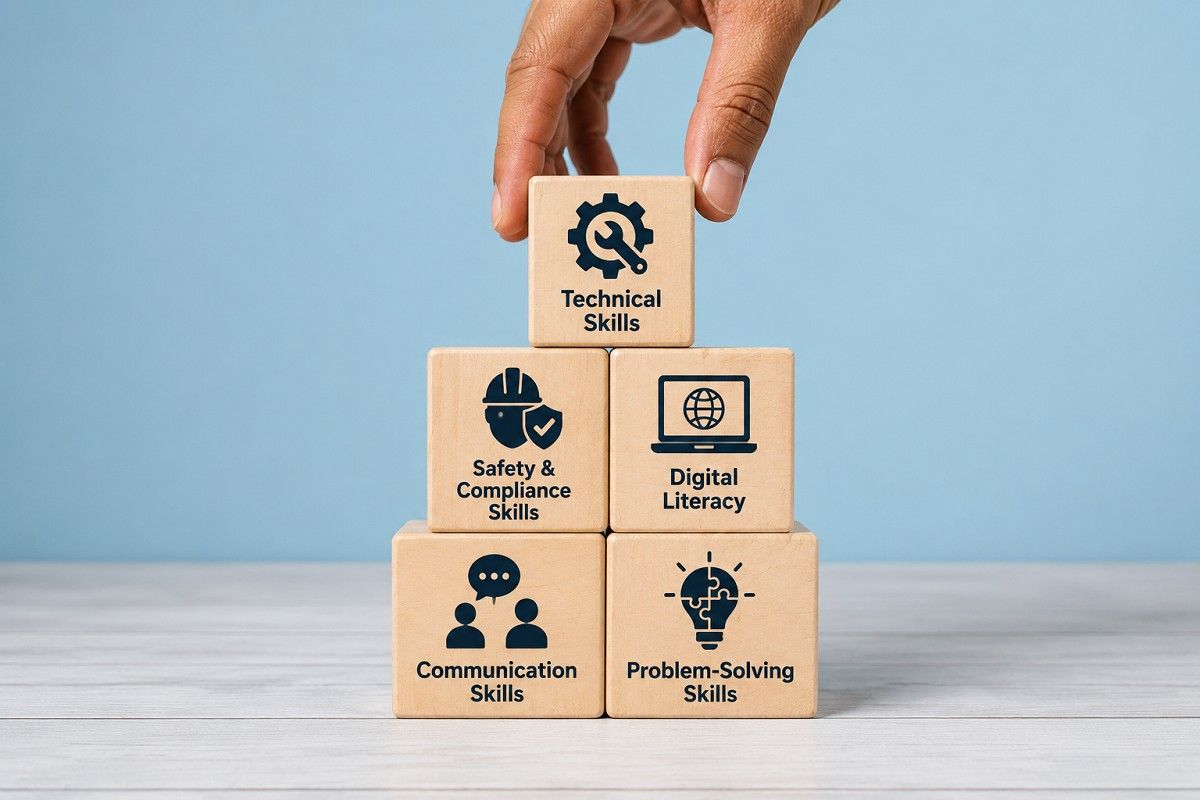
Technical Skills
These include machinery operation, hand tools, power tools, equipment handling, measuring, loading, assembly, and basic maintenance.
Safety & Compliance Skills
Workplace safety is essential. Certifications such as WHMIS, first aid, fall protection, forklift training, and site-specific safety orientation can improve placement opportunities.
Digital Literacy
Digital skills are no longer only for office jobs. Many labour workers now use scheduling platforms, time-tracking apps, barcode scanners, inventory systems, and mobile reporting tools. The International Labour Organization notes that digital skills are increasingly important as workplaces adapt to new technologies.
Communication Skills
Good communication helps workers follow instructions, report hazards, coordinate with crews, and avoid costly mistakes.
Problem-Solving Skills
On-site work changes quickly. Workers who can make sound decisions, adapt to delays, and resolve minor issues are valuable in fast-moving labor environments.
How Employers Benefit from Skill Stacking
Employers gain from a more flexible workforce. Multi-skilled workers can cover more tasks, move between departments, and support peak demand without constant rehiring.
Key benefits include:
- Lower hiring and training costs.
- Better productivity on job sites.
- Easier shift coverage.
- Faster response to changing workloads.
- Stronger team performance.
For employers, a skills-based workforce can improve both operational efficiency and employee retention.
Challenges of Building Multiple Skills
Learning several skills takes time. Some workers may struggle to access affordable training or may not know which certifications matter most.
There is also a balance between breadth and depth. Workers should avoid collecting random skills. The best approach is to build around one core job path, then add skills that support it.
How Workers Can Start
Start with one core skill linked to your current or target role. For example, if you work in warehousing, begin with safe material handling. Then add forklift certification, inventory software, and communication training.
Practical steps include:
- Choose one main labour skill.
- Add one safety certification.
- Learn one digital workplace tool.
- Ask supervisors for cross-training.
- Track your skills on your resume.
Little, steady progress is better than trying to learn everything at once.
Role of Staffing Agencies in Skill Development
The role of staffing agencies in skill development is becoming more important. Agencies help workers understand which skills employers want, identify gaps, and connect candidates with roles where they can grow.
A staffing agency can also guide workers toward training programs, certifications, and job placements that reward multi-skilled experience.
At Hire Labour, we support workforce growth by helping job seekers find suitable labour opportunities and helping employers access dependable, adaptable workers.
Future of Skill-Based Labour Work
By 2030, hybrid labour roles may become more common. Employers will likely expect workers to combine hands-on ability with safety knowledge, digital literacy, and teamwork.
Adaptable workers will have an advantage. The labour industry will still need physical skill, reliability, and effort, but those qualities will be stronger when paired with continuous learning.
Key Takeaways
Skill stacking is no longer just an advantage; it is becoming a necessity for long-term success in the modern labour workforce. As industries continue to evolve with automation, digital tools, and changing workplace demands, workers who continuously upgrade and combine their skills will stand out, earn better opportunities, and build more stable careers.
Whether you are just starting your journey or looking to grow in your current role, now is the right time to invest in your skill development and stay future-ready.
At Hire Labour, we are committed to helping workers connect through better opportunities and stronger skill development pathways. Explore the latest labour job openings, gain access to trusted opportunities, and take the next step in your career today.
FAQs
What does skill stacking mean?
It means combining several useful skills that support each other, such as equipment operation, safety training, digital tools, and communication.
Why is it important for labour workers?
It helps labour workers qualify for more jobs, stay adaptable, and remain valuable as workplaces change.
Which skills should I learn first?
Start with a core job skill, then add safety training, equipment handling, digital literacy, and communication skills to build a strong and well-rounded skill stack.
Does skill stacking increase salary?
It can. Workers with multiple useful skills may qualify for better roles, more responsibility, and higher pay.
Can beginners start skill stacking easily?
Yes. Beginners can start with basic safety training, entry-level labour skills, and on-the-job learning.
What are stackable skills?
Stackable skills are abilities that work well together, such as forklift operation, WHMIS, inventory software, teamwork, and problem-solving.