Recruitment is no longer a simple “post a job and wait” process. In 2026, businesses are facing rising hiring costs, persistent labour shortages, wage pressure, and intensifying competition for skilled talent.
According to the ManpowerGroup 2026 Talent Shortage Survey, more than 7 in 10 employers report difficulty finding the talent they need, highlighting the tightness of the labor market. At the same time, recruitment expenses continue to place growing pressure on business budgets.
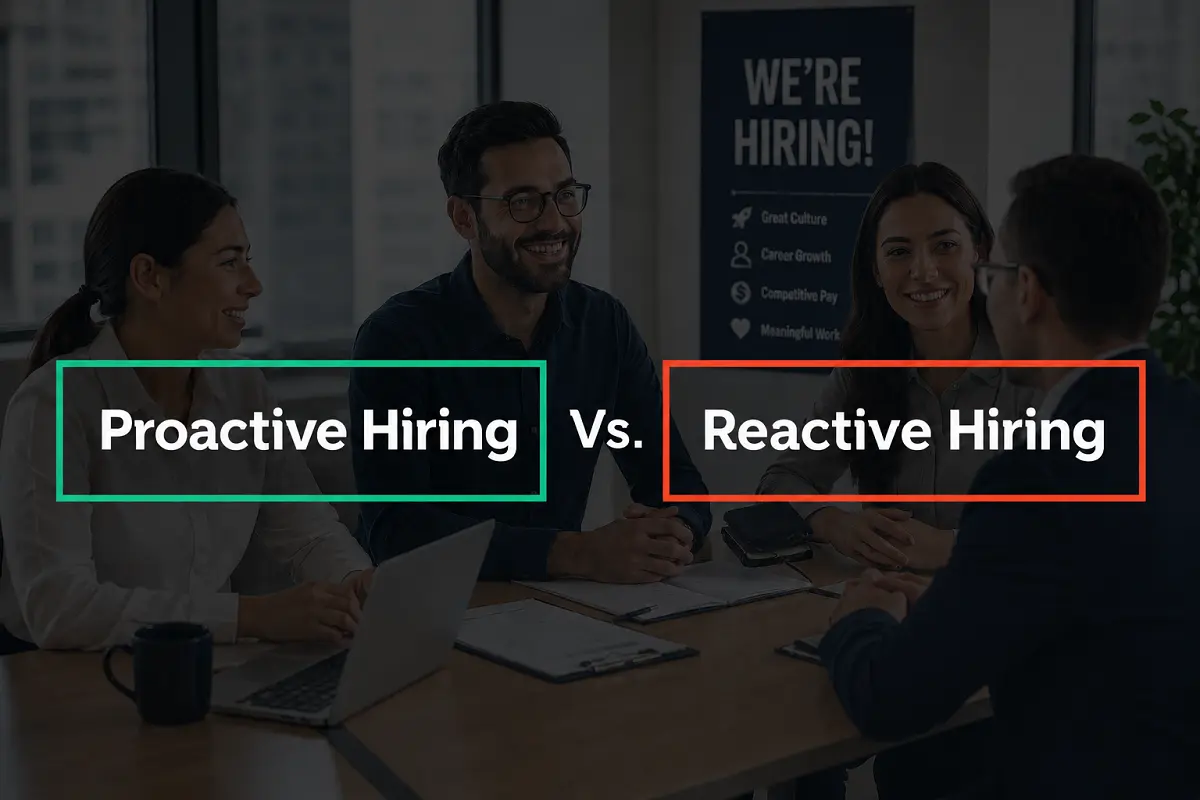
This is why the debate around proactive vs reactive hiring has become increasingly important. Companies can no longer rely solely on reactive hiring, filling roles only when a vacancy arises or demand spikes suddenly.
In this blog, we will compare proactive vs reactive hiring and help you evaluate which approach delivers greater cost savings and long-term value in 2026.
What Is Proactive Hiring?
Proactive hiring is a long-term recruitment strategy where businesses identify, attract, and engage talent before an urgent role needs to be filled.
Instead of waiting for a vacancy, companies build a structured talent pipeline. This means they already have pre-qualified candidates, workforce forecasts, and recruitment plans in place.
How It Works
Proactive hiring usually includes:
- Workforce forecasting based on business growth.
- Continuous candidate sourcing.
- Pre-screening skilled workers.
- Building talent pools for future roles.
- Maintaining relationships with passive candidates.
- Planning for seasonal, project-based, or expansion needs.
This approach helps companies prepare before staffing gaps become expensive problems.
What Is Reactive Hiring?
Reactive hiring is a short-term recruitment method. A company begins hiring only when a vacancy, resignation, emergency project, or sudden demand appears.
This is the traditional approach many businesses still use. It may feel practical because hiring starts only when needed. However, it can create pressure, rushed decisions, and higher costs.
How It Works
Reactive hiring often follows this pattern:
- An employee resigns or demand increases.
- The company posts a job opening.
- Hiring managers screen quickly.
- Interviews happen under pressure.
- A candidate is onboarded as fast as possible.
This method can work in emergencies, but it is rarely the most cost-efficient long-term hiring strategy.
Proactive vs Reactive Hiring: Cost Comparison
Cost is where the difference becomes clear. The Proactive vs Reactive Hiring comparison is not only about recruitment fees. It is also about lost time, productivity gaps, overtime, turnover, and hiring mistakes.
Proactive Hiring and Cost Efficiency
Proactive hiring can save money by reducing emergency recruitment costs. When businesses already have a talent pipeline, they spend less time advertising roles, reviewing unqualified applications, and rushing decisions.
It also helps reduce:
- Overtime costs for existing employees.
- Productivity loss during vacancies.
- Overreliance on last-minute recruitment.
- Poor-fit hires caused by time pressure.
- Repeated hiring for the same role.
Over time, proactive hiring supports long-term recruitment cost reduction. It allows companies to compare candidates carefully, plan onboarding, and hire for both skills and culture fit.
Reactive Hiring and Hidden Costs
Reactive hiring may seem cheaper at first because businesses do not spend money until a role opens. But hidden costs can build quickly.
These include:
- Higher urgency hiring expenses.
- More job advertising spend.
- Productivity gaps while roles stay vacant.
- Burnout among existing employees.
- Lost revenue from delayed work.
- Costly hiring mistakes.
When managers are under pressure, they may choose the first acceptable candidate instead of the best available candidate. That can lead to poor performance, early turnover, and another expensive hiring cycle.
Talent Quality and Hiring Outcomes
Hiring speed matters, but talent quality often determines the real return on recruitment investment.
Advantages of Proactive Hiring
The main advantages of proactive hiring include better access to qualified candidates, more time to evaluate skills, and stronger culture alignment.
Proactive hiring gives employers the chance to engage both active and passive candidates. Passive candidates may not be applying for jobs today, but they may be open to the right opportunity later.
This approach helps businesses:
- Compare more candidates.
- Assess technical and soft skills.
- Improve culture fit.
- Strengthen retention.
- Reduce hiring risk.
Better hires usually stay longer, perform better, and reduce future recruitment costs.
Limitations of Reactive Hiring
The limitations of reactive hiring become clear when candidate availability is low. In a tight labour market, the best candidates may already be employed or unavailable on short notice.
Reactive hiring can also lead to faster but less strategic decisions. Hiring managers may focus mainly on filling the gap instead of choosing someone who supports long-term growth.
Common limitations include:
- Smaller candidate pool.
- Less evaluation time.
- Higher pressure on hiring teams.
- Greater risk of poor fit.
- More inconsistent hiring outcomes.
Impact on Workforce Planning and Stability
A strong workforce planning strategy helps businesses stay stable during growth, turnover, and market changes.
Proactive Hiring Supports Long-Term Planning
Proactive hiring supports better workforce forecasting. Businesses can review upcoming projects, seasonal demand, retirement risks, turnover trends, and expansion plans.
This makes staffing more predictable. It also reduces operational disruptions because managers know where future talent will come from.
For industries such as construction, logistics, manufacturing, healthcare, and skilled trades, this is especially valuable. Labour shortages in sectors such as energy and construction are expected to remain challenging, with Reuters reporting major demand for skilled workers tied to grid, energy, and data center growth.
Reactive Hiring Creates Uncertainty
Reactive hiring creates uncertainty because staffing decisions happen only after a problem appears.
This can lead to:
- Sudden staffing gaps.
- Operational pressure on teams.
- Delayed projects.
- Inconsistent workforce flow.
- Higher stress for managers.
When hiring is always urgent, companies often lose control over timing, cost, and candidate quality.
Employee Retention and Productivity Impact
Hiring costs do not end once a candidate accepts an offer. Retention and productivity have a direct effect on long-term savings.
Why Proactive Hiring Improves Retention
Proactive hiring improves retention because businesses have more time to prepare the employee experience.
This includes:
- Better onboarding plans.
- Clearer role expectations.
- Stronger training schedules.
- More thoughtful team placement.
- Reduced pressure on new hires.
When employees join with proper support, they are more likely to feel engaged and stay longer. Existing teams also benefit because they are not constantly covering gaps or working overtime.
When Reactive Hiring Still Works Best
Reactive hiring is not always bad. In some cases, it is necessary.
It can work well for:
- Emergency workforce shortages.
- Seasonal or temporary staffing needs.
- Unexpected resignations.
- Sudden project demands.
- Short-term labour coverage.
Example: A company may need extra workers for a contract, event, warehouse surge, or construction phase. In these cases, speed matters. Reactive hiring can help fill immediate gaps when supported by a reliable staffing agency in Canada.
Hybrid Hiring Strategy: The Smart Approach in 2026
The best strategy in 2026 is often a hybrid hiring model. This combines proactive pipelines with reactive flexibility.
A hybrid approach allows businesses to plan for common hiring needs while still responding quickly to unexpected changes.
How a Hybrid Strategy Works
Businesses can:
- Build talent pools for recurring roles.
- Forecast workforce needs quarterly.
- Use staffing agencies for rapid scaling.
- Keep backup candidates for critical roles.
- Track turnover trends.
- Plan onboarding before demand peaks
This gives companies both cost control and hiring speed.
The key is to avoid relying only on last-minute recruitment. A business that plans ahead can reduce hiring costs, improve workforce stability, and still respond to urgent needs when they appear.
For employers looking to control labour costs, improve staffing speed, and reduce hiring stress, partnering with a staffing agency can make a major difference.
Wrap Up
In 2026, the difference between proactive and reactive hiring is not just about recruitment style; it is about long-term cost control, workforce stability, and business growth.
While reactive hiring can solve immediate staffing gaps, it often comes with higher hidden costs, rushed decisions, and inconsistent hiring outcomes. On the other hand, proactive hiring helps businesses build strong talent pipelines, reduce vacancy-related losses, and improve retention by focusing on better planning and candidate quality.
However, the most effective approach for modern organizations is a hybrid hiring strategy that combines planning with the flexibility to respond quickly to unexpected needs.
For employers looking to reduce hiring costs, speed up recruitment, and maintain a reliable workforce, working with a professional staffing partner can make a significant difference.
Hire Labour provides expert staffing solutions in Canada, helping businesses access pre-screened talent, fill roles faster, and build stronger, more cost-efficient teams.
Get in touch with us today to streamline your hiring process and stay ahead in 2026’s competitive labour market.
People Also Ask
1. What is the difference between proactive and reactive hiring?
Proactive hiring means recruiting and building talent pipelines before a role becomes urgent. Reactive hiring means starting recruitment only after a vacancy or sudden staffing need appears.
2. Which hiring strategy is more cost-effective?
Proactive hiring is usually more cost-effective in the long term because it reduces emergency hiring costs, productivity gaps, overtime, and poor hiring decisions.
3. What are the risks of reactive hiring?
The main risks include rushed recruitment, limited candidate choice, higher turnover, productivity loss, team burnout, and increased hiring costs.
4. Can businesses use both hiring methods together?
Yes. Many businesses use a hybrid hiring strategy. They build proactive talent pipelines for planned needs while using reactive hiring for emergencies, seasonal work, or unexpected demand.
5. Why is proactive hiring better for long-term growth?
Proactive hiring supports workforce planning, improves retention, strengthens candidate quality, and helps businesses scale with fewer staffing disruptions.