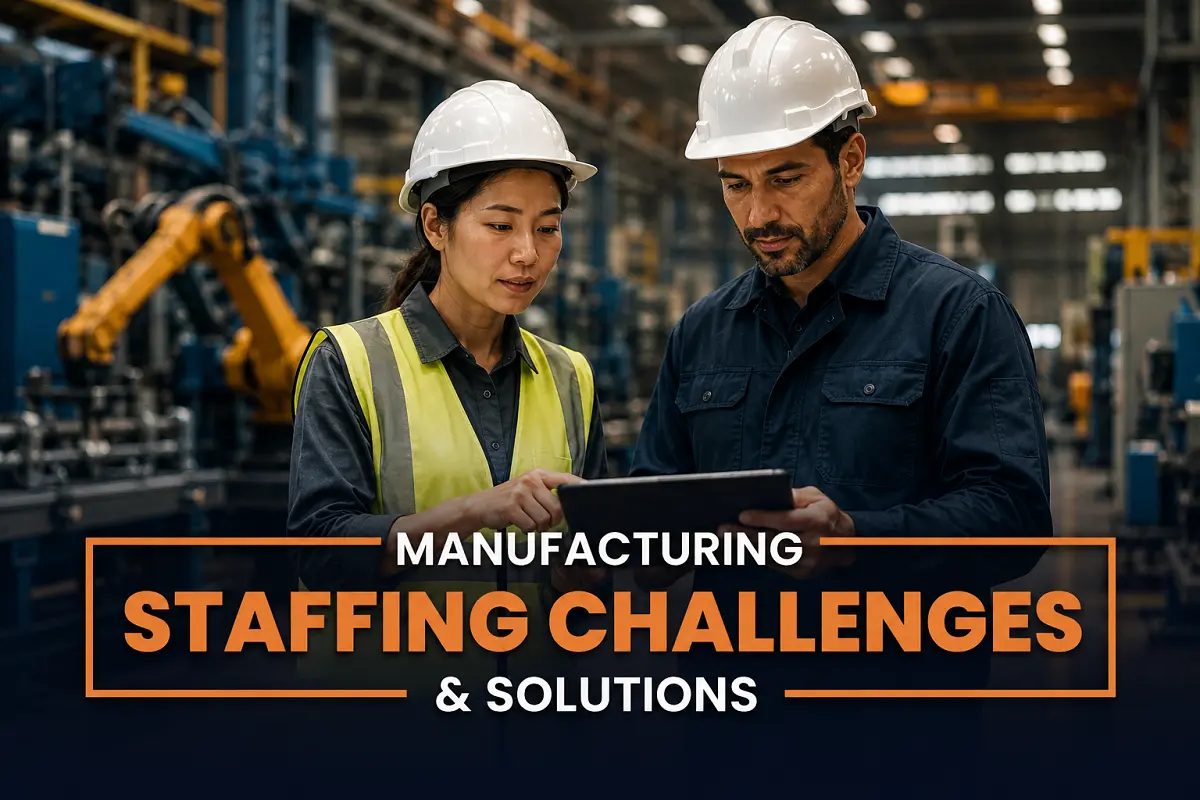
The manufacturing industry has always depended on a reliable workforce to keep production moving. However, finding and retaining qualified employees has become increasingly difficult.
From skilled labour shortages to rising turnover rates, manufacturers across Canada are facing hiring challenges that directly affect productivity, customer satisfaction, and long-term growth.
These manufacturing staffing challenges are expected to become even more significant in 2026 as experienced workers retire, technology continues to evolve, and talent competition grows across multiple industries.
For manufacturers, the ability to build and maintain a dependable workforce is no longer just an HR concern. It is a business priority.
In this guide, we’ll explore the biggest staffing challenges facing manufacturers, why they exist, and practical solutions that can help businesses stay competitive.
What Are Manufacturing Staffing Challenges?
Manufacturing staffing challenges are the obstacles companies face in recruiting, managing, and retaining the employees needed to support production and operations.
Many manufacturers struggle to fill open positions quickly while maintaining quality standards. At the same time, changing workforce expectations, new technologies, and an increasingly competitive labour market have made recruitment more complex than ever.
Without the right people in place, businesses often experience production delays, higher labour costs, lower efficiency, and increased pressure on existing employees.
Top Manufacturing Staffing Challenges in 2026
Understanding the top manufacturing staffing challenges in 2026 is the first step toward developing an effective workforce strategy.
Labour Shortages
Labour shortages continue to be one of the industry’s biggest concerns.
Demand for experienced machine operators, assemblers, welders, maintenance technicians, and other skilled workers remains high. Meanwhile, many experienced employees are reaching retirement age, leaving employers with fewer qualified candidates to replace them.
Skills Gaps
Modern manufacturing relies on advanced equipment, automation, robotics, and digital production systems.
While technology creates opportunities, it also increases the demand for employees with specialized technical skills. Many businesses struggle to find workers who already possess the required knowledge or who can adapt quickly to evolving manufacturing environments.
High Employee Turnover
Frequent turnover creates ongoing recruitment challenges.
Employees may leave for higher wages, better schedules, career advancement opportunities, or improved workplace conditions. Every departure increases recruitment costs while placing additional pressure on existing teams.
Replacing experienced workers also takes time, reducing overall productivity during the transition.
Competition for Talent
Manufacturers are no longer competing only with other manufacturing companies.
Construction, transportation, warehousing, logistics, and other industries often recruit from the same labour pool. This increased competition places pressure on employers to offer competitive wages, benefits, and career opportunities.
Absenteeism and Workforce Reliability Issues
Unexpected absences can disrupt production schedules and delay customer orders.
When businesses operate with limited staffing, even a small number of absences can affect output, increase overtime costs, and place additional responsibilities on other employees.
Reliability has become just as important as technical ability when building successful manufacturing teams.
Seasonal and Fluctuating Labour Demands
Production needs often change throughout the year.
Some manufacturers experience seasonal demand spikes, while others see workload fluctuate based on customer orders or supply chain activity. Scaling the workforce quickly without sacrificing quality remains an ongoing challenge.
How Manufacturers Can Overcome Staffing Challenges
Although hiring difficulties continue to grow, there are practical steps manufacturers can take to strengthen their workforce.
Invest in Employee Training and Upskilling
Developing current employees is often one of the most effective ways to address skills shortages.
Training programs, technical certifications, and cross-training initiatives help employees build new capabilities while increasing workforce flexibility.
Improve Recruitment Strategies
Employers should regularly review job descriptions, simplify application processes, and expand recruitment channels to reach a broader pool of candidates.
A faster and more organized hiring process can also reduce the risk of losing qualified applicants to competitors.
Enhance Employee Retention Programs
Retaining experienced employees is usually more cost-effective than constantly replacing them.
Recognition programs, career development opportunities, supportive leadership, and a positive workplace culture all contribute to stronger employee retention.
Offer Competitive Compensation and Benefits
Compensation remains an important factor for today’s workforce.
Competitive wages, health benefits, retirement plans, paid time off, and opportunities for advancement help manufacturers attract and retain skilled employees.
Leverage Workforce Flexibility
Flexible staffing models allow businesses to adjust workforce levels as production demands change.
Combining permanent employees with temporary or contract workers provides greater operational flexibility while controlling labour costs.
Strengthen Employer Branding
Candidates often research employers before applying.
Companies with strong reputations for workplace safety, employee development, and positive culture are generally more successful at attracting quality applicants.
How Staffing Agencies Help Solve Manufacturing Staffing Challenges
Many manufacturers partner with staffing agencies to improve hiring efficiency and reduce recruitment pressure.
Faster Access to Qualified Workers
Staffing agencies maintain active candidate networks, allowing employers to fill vacancies more quickly than traditional recruitment methods.
Instead of starting every search from scratch, businesses gain access to qualified candidates who are ready to work.
Flexible Temporary and Permanent Staffing Solutions
Manufacturers often require different staffing solutions depending on production demands.
Staffing agencies can provide temporary workers during busy seasons, contract employees for specialized projects, or permanent placements for long-term growth.
Reduced Hiring Time and Costs
Recruitment involves advertising, screening, interviewing, and onboarding.
Staffing agencies handle much of this work, helping employers reduce administrative costs while shortening hiring timelines.
Support During Labour Shortages
During periods of labour shortages, staffing partners provide additional recruiting resources and access to larger talent pools, helping businesses maintain production even when qualified workers are difficult to find.
How Hire Labour Supports Manufacturing Employers
Hire Labour understands the challenges manufacturers face in today’s competitive hiring environment.
By providing access to pre-screened manufacturing workers, the agency helps employers reduce hiring risks while filling positions more efficiently.
Whether businesses need temporary employees for seasonal production, contract workers for specific projects, or permanent team members for long-term growth, we offer flexible staffing solutions in Canada that adapt to changing operational needs.
Conclusion
Manufacturing companies continue to face growing staffing challenges in 2026. Labour shortages, skills gaps, turnover, competition for talent, and changing production demands all place pressure on hiring and operations.
Successfully addressing these manufacturing staffing challenges requires a combination of stronger recruitment strategies, employee development, competitive compensation, workforce flexibility, and reliable staffing support.
Partnering with a trusted staffing agency in Canada such as Hire Labour gives manufacturers access to qualified talent, faster hiring solutions, and workforce flexibility that help keep production moving.
If your business is looking to strengthen its manufacturing workforce, get in touch with us today for long-term operational success.
FAQs
What are the biggest manufacturing staffing challenges in 2026?
The biggest challenges include labour shortages, skills gaps, high employee turnover, increased competition for workers, absenteeism, and changing workforce demands.
Why is it difficult to hire manufacturing workers?
Many employers face a limited supply of skilled candidates, rising retirements, changing employee expectations, and competition from other industries that recruit from the same labour pool.
How do labour shortages affect manufacturing companies?
Labour shortages can reduce production capacity, delay customer orders, increase overtime costs, lower productivity, and place additional pressure on existing employees.
What strategies can improve manufacturing employee retention?
Competitive compensation, career development opportunities, employee recognition, supportive leadership, and a positive workplace culture all contribute to stronger retention.