
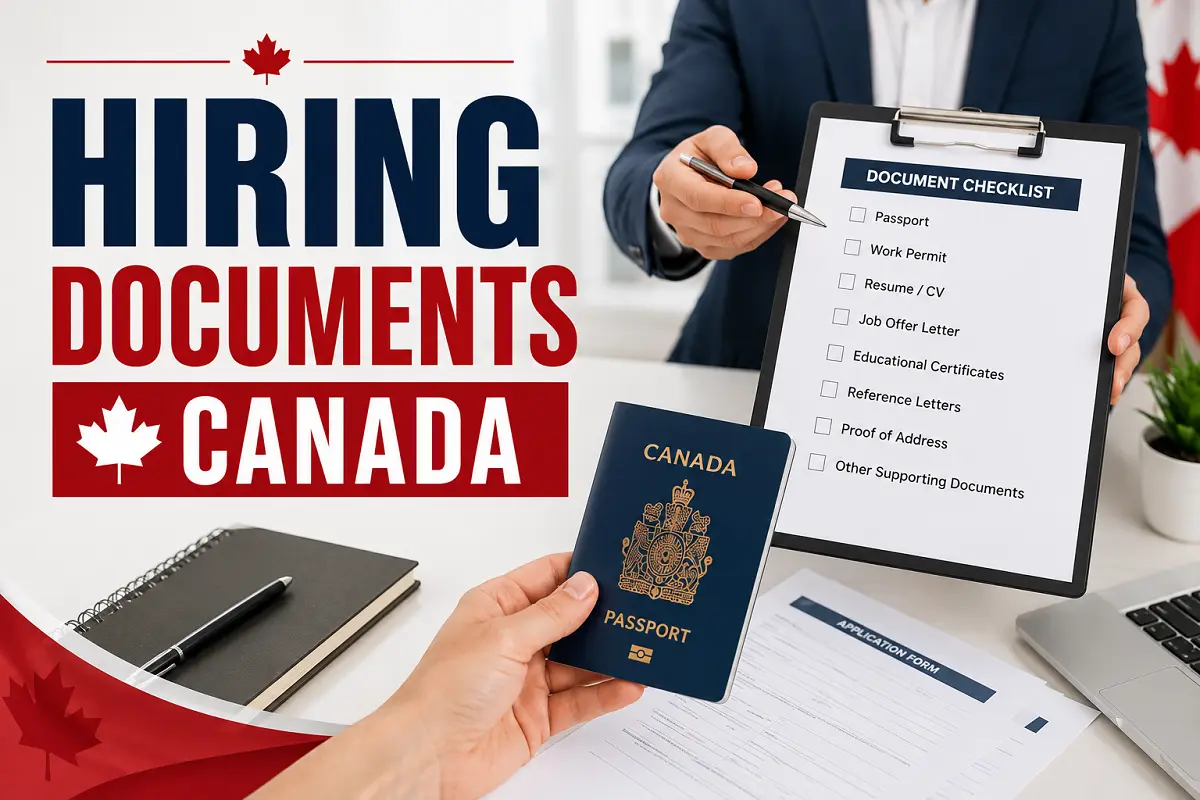
Hiring the right employee involves more than reviewing resumes and conducting interviews. Before a new hire starts work, employers must collect the necessary documentation to ensure the hiring process is compliant, organized, and efficient.
Proper documentation helps verify a candidate’s identity, confirm their legal eligibility to work in Canada, support accurate payroll processing, and reduce the risk of legal or administrative issues. It also creates a smoother onboarding experience for both employers and employees.
It’s important to remember that document requirements can vary depending on the role, industry, and employment status. For example, a construction labourer may need additional safety certifications, while an office employee may require fewer role-specific documents.
This guide covers the essential hiring documents Canadian employers should collect, additional requirements for labour-intensive industries, and best practices for managing employee records.
Why Hiring Documents Matter for Canadian Employers
Collecting the right documents is a critical step in every hiring process. Missing or inaccurate information can create delays, payroll issues, and compliance concerns.
Ensure Compliance with Employment Laws
Canadian employers are responsible for meeting federal and provincial employment requirements when hiring workers.
Collecting the appropriate documentation helps businesses comply with tax regulations, employment standards, and workplace safety requirements while maintaining accurate employee records.
Verify Employee Identity and Work Eligibility
Employers must confirm that every employee is who they claim to be and, where applicable, has the legal right to work in Canada.
Proper verification helps prevent hiring errors and reduces the risk of compliance issues.
Simplify Payroll and Onboarding
Accurate employee information allows payroll to be set up correctly from the first day of employment.
When documents are collected early, employers can process tax deductions, direct deposits, and employee records without unnecessary delays.
Reduce Legal and Administrative Risks
Keeping complete employee files helps employers respond more effectively to audits, workplace inspections, and employment-related questions.
Proper documentation also reduces disputes by maintaining accurate employment records.
Essential Hiring Documents Employers Need from Workers
The following are the most common Essential Hiring Documents Employers Need from Workers across Canada.
1. Social Insurance Number (SIN)
A Social Insurance Number (SIN) is required for payroll reporting and tax purposes.
Employers need the employee’s SIN to report earnings to the Canada Revenue Agency (CRA) and administer payroll correctly.
2. Government-Issued Photo Identification
Valid photo identification helps verify an employee’s identity.
Common examples include:
- Driver’s licence
- Canadian passport
- Provincial photo identification card
3. Work Permit or Proof of Eligibility to Work in Canada (If Applicable)
If an employee is not a Canadian citizen or permanent resident, employers should confirm that the employee has valid authorization to work in Canada.
Examples may include:
- Valid work permit
- Permanent resident documentation
- Other authorized immigration documents
4. TD1 Federal and Provincial Tax Forms
Employees complete TD1 forms so employers can calculate the correct income tax deductions from each pay period.
Both federal and applicable provincial forms should be completed before payroll begins.
5. Direct Deposit Information
Most employers pay employees through direct deposit.
Collecting banking information before the employee’s first payday helps ensure wages are deposited accurately and on time.
6. Emergency Contact Information
Emergency contact details allow employers to respond quickly if an employee experiences a medical emergency or workplace incident.
Employees should provide updated contact information whenever changes occur.
7. Resume and Employment History
Keeping a copy of the employee’s resume and employment history supports recruitment records and provides a reference for qualifications and previous experience.
8. Educational Certificates and Diplomas
Certain positions require proof of education or specialized training.
Employers should request copies of diplomas, degrees, or certificates where relevant to the role.
9. Professional Licences and Certifications
Many industries require employees to hold specific certifications before beginning work.
Examples include:
- WHMIS
- Forklift certification
- Working at Heights
- Red Seal certification
- First Aid and CPR
- Confined Space Training
Employers should verify that certifications are current and valid.
10. Driving Licence (If Required)
Employees operating company vehicles or performing driving-related duties should provide a valid driving licence.
Depending on the position, employers may also request a driver’s abstract.
11. Criminal Background Check (If Required)
Some positions require criminal record checks, particularly when employees work with vulnerable individuals, handle sensitive information, or access secure facilities.
Background checks should only be requested where appropriate for the position.
12. Professional References
References help employers verify previous work experience, reliability, attendance, and overall job performance.
Speaking with previous supervisors can provide valuable insights before making a final hiring decision.
Additional Hiring Documents for Labour and Skilled Trades
Construction, manufacturing, warehousing, logistics, and skilled trades often require additional documentation before employees begin work.
These may include:
Safety Training Certificates
Proof of mandatory workplace safety training such as WHMIS, Working at Heights, or Fall Protection.
PPE Acknowledgment Forms
Signed documents confirming employees have received and understand personal protective equipment (PPE) requirements.
Site Orientation Documents
Many job sites require workers to complete orientation programs before accessing the workplace.
Signed acknowledgment forms should be retained in employee files.
Equipment Operator Certifications
Employees operating forklifts, aerial lifts, cranes, or other specialized equipment should provide valid certifications where required.
Trade-Specific Licences
Certain skilled trades require provincial or national licensing before work can begin.
Examples include electricians, plumbers, welders, and other certified trades.
Medical Fitness or Drug Testing Documents (If Required)
Some employers, particularly in safety-sensitive industries, may require medical fitness assessments or drug and alcohol testing where permitted by applicable laws and workplace policies.
Best Practices for Collecting and Managing Hiring Documents
Collecting documents is only part of the process. Employers should also manage employee records responsibly.
Verify Documents Before the Employee’s First Day
Review all documentation before onboarding begins to identify missing information and avoid payroll or compliance delays.
Store Employee Records Securely
Employee records should be stored securely using appropriate physical or digital systems with restricted access.
Keeping organized records makes future updates and audits much easier.
Protect Employee Privacy
Hiring documents often contain sensitive personal information.
Employers should follow applicable Canadian privacy legislation and limit access to authorized personnel only.
Keep Documents Updated
Certain records require regular updates, including work permits, licences, certifications, emergency contacts, and tax forms when applicable.
Maintaining current documentation helps employers remain compliant throughout the employment relationship.
Partner with a Staffing Agency to Simplify Hiring
One of the easiest ways to improve hiring efficiency is by working with a trusted staffing agency in Canada. Staffing agencies can help streamline the recruitment process by pre-screening candidates and assisting with onboarding requirements.
They may also help verify employment documents, review required certifications and licences, conduct reference checks, and confirm work eligibility before candidates are placed.
This can save employers time, reduce administrative workload, and support a more efficient hiring process.
Conclusion
Collecting complete and accurate hiring documents is one of the most important steps in building a compliant and efficient workforce. Proper documentation helps employers verify identity, confirm work eligibility, process payroll correctly, and reduce legal and administrative risks.
For industries such as construction, manufacturing, warehousing, and logistics, additional certifications and safety documentation are equally important to ensure workers are prepared before stepping onto the job site.
Partnering with HireLabour.ca can simplify every stage of the hiring process. From candidate screening and document verification to onboarding support, we help Canadian employers hire qualified workers faster while reducing hiring risks.
People Also Ask
1. What documents do employers need from new employees in Canada?
Most employers require a Social Insurance Number (SIN), government-issued photo identification, TD1 tax forms, direct deposit information, emergency contact details, and proof of eligibility to work in Canada where applicable.
Some positions also require licences, certifications, and references.
2. Is a Social Insurance Number (SIN) required before hiring someone?
Yes. Employers need an employee’s SIN to process payroll and report earnings to the Canada Revenue Agency (CRA).
3. Can employers ask for proof of eligibility to work in Canada?
Yes. Employers may request documentation confirming that an individual is legally authorized to work in Canada when applicable.
4. What certifications are commonly required for labour and construction jobs?
Common certifications include WHMIS, Forklift Certification, First Aid and CPR, Fall Protection, Confined Space Training, and trade-specific licences depending on the role.
5. How long should employers keep employee hiring documents?
Employers should keep employee hiring documents for the period required under applicable federal and provincial employment, payroll, and tax laws.
Retention requirements vary depending on the type of record, so employers should follow the regulations that apply to their business and location.
6. Are hiring document requirements different for temporary workers?
Many core hiring documents remain the same, but additional requirements may depend on the assignment, industry, and specific workplace safety standards.
7. Can a staffing agency verify hiring documents for employers?
Yes. Many staffing agencies verify candidates’ identities, work eligibility, references, certifications, and other employment documents before placing them, helping employers save time and reduce hiring risks.