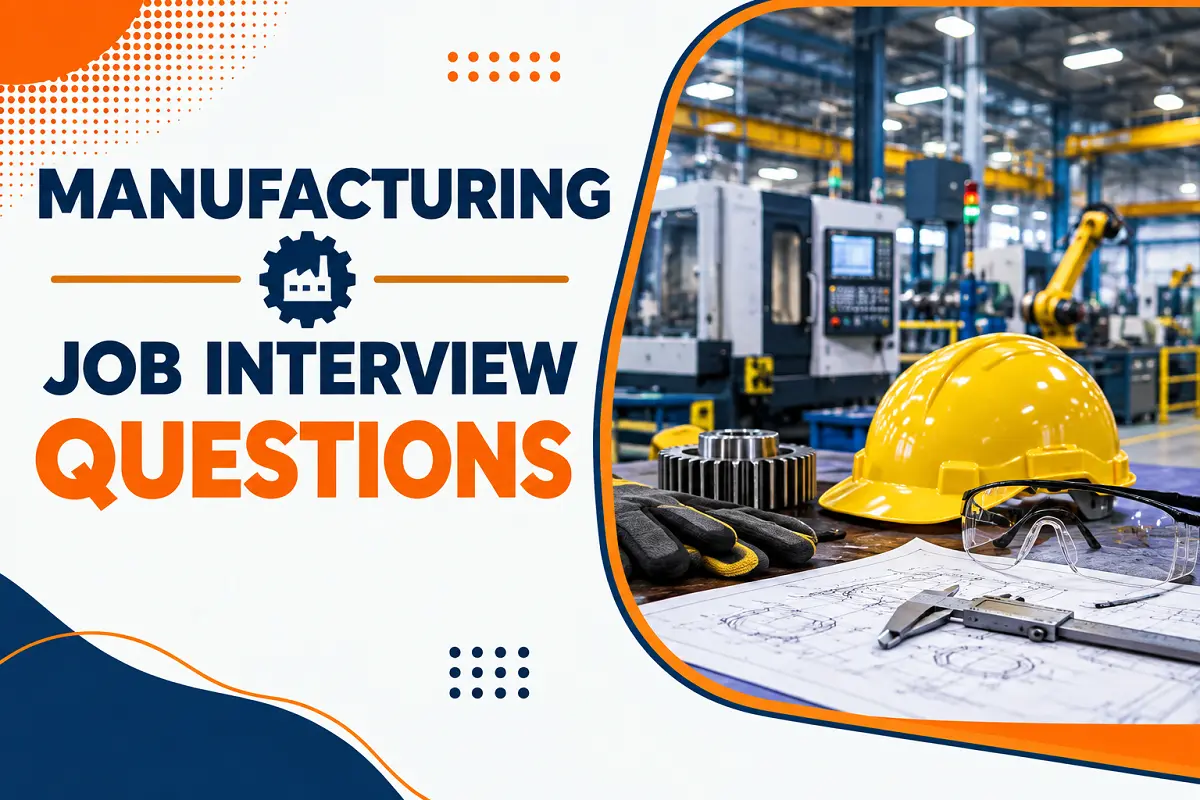
Preparing for a manufacturing job interview involves more than knowing how to operate equipment. Employers may assess your technical experience, safety awareness, attention to detail, reliability, problem-solving skills, and ability to work effectively with others.
Understanding the top manufacturing job interview questions helps you prepare clear, relevant answers and show how your skills and experience align with the position.
Whether you’re applying for a production, assembly, machine operation, quality control, maintenance, or another manufacturing role, thorough preparation can help you approach the interview with greater confidence.
In this guide, we’ll cover what employers look for, how to prepare, and the top manufacturing job interview questions for 2027.
We’ll also share practical answering tips, common mistakes to avoid, key questions candidates can ask employers, and how HireLabour.ca can help job seekers.
What Employers Look for in Manufacturing Candidates
Manufacturing employers often look for candidates who can perform their responsibilities safely, accurately, and consistently.
Important qualities include:
- Technical knowledge and relevant experience
- Workplace safety awareness
- Attention to detail and quality control
- Problem-solving and troubleshooting skills
- Teamwork and communication
- Reliability and punctuality
- Ability to follow procedures
- Ability to meet production requirements
Depending on the position, employers may also look for experience with specific machinery, production systems, quality standards, or manufacturing software.
How to Prepare for a Manufacturing Job Interview in 2027
Before your interview, take time to:
- Research the employer and position: Understand what the company produces and what the position involves.
- Review the job description: Identify the technical skills, experience, certifications, and responsibilities mentioned.
- Refresh technical and safety knowledge: Review equipment, processes, procedures, and safety practices relevant to the role.
- Prepare examples: Think about situations where you solved problems, improved a process, maintained quality, or worked safely under pressure.
- Review common questions: Preparing for Top Manufacturing Job Interview Questions for 2027 can help you organize your thoughts before the interview.
- Prepare questions: Have a few relevant questions ready to demonstrate interest in the position.
Top Manufacturing Job Interview Questions for 2027
General Manufacturing Interview Questions
Tell me about yourself and your manufacturing experience.
Focus on your relevant experience, responsibilities, equipment, processes, and achievements.
Why do you want to work in manufacturing?
Explain what interests you about the industry and the type of work you want to pursue.
Why are you interested in this manufacturing position?
Connect your skills and experience to the employer’s requirements.
What do you know about our company and products?
Show that you researched the organization before the interview.
What are your strengths as a manufacturing worker?
Choose strengths relevant to the role, such as reliability, precision, safety awareness, teamwork, or troubleshooting.
Technical Manufacturing Job Interview Questions
What manufacturing equipment or machinery have you worked with?
Be specific about the equipment you have actually operated.
How do you troubleshoot a machine or production issue?
Explain how you identify the problem, follow procedures, check relevant components, and escalate the issue when necessary.
What manufacturing processes are you familiar with?
Mention processes you have genuinely worked with, such as assembly, machining, fabrication, packaging, or material handling.
How do you ensure accuracy when operating machinery?
Discuss following operating procedures, checking measurements, monitoring equipment, and completing quality checks.
What experience do you have with production systems or manufacturing software?
Mention the systems you have used and explain what you used them for.
Safety-Related Interview Questions
What steps do you take to maintain workplace safety?
Talk about following procedures, using appropriate PPE, maintaining awareness, and reporting hazards.
What would you do if you noticed an unsafe condition?
Explain that you would follow workplace reporting procedures and take appropriate action to prevent unnecessary risk.
How do you handle safety procedures when production is under pressure?
Emphasize that production targets should not lead you to ignore required safety procedures.
What personal protective equipment (PPE) have you used?
Mention equipment you have actually used and explain why it was required.
How would you respond to a workplace accident or equipment malfunction?
Explain that you would follow the company’s emergency and reporting procedures and avoid taking unnecessary risks.
Quality Control Interview Questions
How do you maintain quality standards during production?
Discuss following specifications, monitoring work, completing inspections, and reporting issues.
What would you do if you noticed a defective product?
Explain how you would identify, isolate, report, or correct the issue according to company procedures.
How do you prevent mistakes on a production line?
Mention attention to instructions, measurements, inspections, equipment checks, and consistent processes.
What experience do you have with quality inspections?
Give examples of inspections or quality-control responsibilities you have actually performed.
How do you handle a situation where production targets conflict with quality requirements?
Explain that quality requirements and established procedures need to be followed while communicating the issue to the appropriate supervisor.
Behavioural Manufacturing Interview Questions
Tell me about a time you solved a production problem.
Describe the problem, what you did, and the result.
Describe a time you made a mistake at work. How did you handle it?
Be honest and focus on what you learned and how you prevented the problem from happening again.
Tell me about a time you worked under pressure.
Give a specific example showing how you maintained safety, quality, and productivity.
Describe a situation where you had to work as part of a team.
Explain your role and how you contributed to the team’s objective.
Tell me about a time you identified and improved an inefficient process.
Describe the original problem, the improvement you suggested or implemented, and the outcome.
How to Answer Manufacturing Job Interview Questions
When answering manufacturing job interview questions, use specific examples rather than general statements.
For behavioural questions, the STAR method can help:
- Situation: Explain the context.
- Task: Describe your responsibility.
- Action: Explain what you did.
- Result: Share the outcome.
Connect your answers to safety, quality, productivity, teamwork, and reliability. Most importantly, be honest about your technical experience and certifications.
If you have not used particular equipment, explain your transferable experience and willingness to learn.
Common Mistakes to Avoid in a Manufacturing Interview
Avoid:
- Arriving unprepared
- Giving vague answers
- Underestimating workplace safety
- Failing to research the employer
- Exaggerating technical skills or certifications
- Forgetting to ask questions
A clear, honest answer is generally more useful than trying to appear experienced with equipment you have never operated.
Questions to Ask Your Manufacturing Interviewer
At the end of the interview, consider asking:
- What does a typical day in this role look like?
- What training is provided to new employees?
- What equipment or technology will I work with?
- How is performance measured?
- What opportunities are available for career development?
These questions can also help you understand whether the position matches your expectations.
How HireLabour.ca Can Help Manufacturing Professionals Find Opportunities
Finding the right manufacturing position can take time, especially when you’re looking for a role that matches your skills, experience, location, and career goals. Navigating job listings and hiring requirements on your own can also slow the process.
Hire Labour helps manufacturing professionals explore relevant employment opportunities across Canada, including permanent and contract positions.
Our recruitment team takes the time to understand your background and career goals, helping connect you with opportunities that align with your experience and preferred type of employment.
From identifying suitable positions to navigating the recruitment process, our team provides support throughout your job search.
Whether you’re an experienced manufacturing professional or looking for your next career opportunity, a staffing partner can offer additional guidance and access to relevant opportunities.
Conclusion
Preparing for the top manufacturing job interview questions for 2027 can help you approach your interview with greater confidence and clearly demonstrate your skills, experience, safety awareness, and ability to handle the demands of the role. Research the employer, review the job requirements, prepare specific examples, and practice clear, honest answers before your interview.
Finding the right opportunity matters, too. Hire Labour helps manufacturing professionals explore permanent and contract positions across Canada based on their skills, experience, and career goals.
Ready to take the next step in your manufacturing career? Contact Hire Labour today to explore relevant opportunities and get support throughout your job search.
FAQs
What skills do manufacturing employers look for?
Employers commonly look for technical knowledge, safety awareness, attention to detail, reliability, teamwork, communication, problem-solving, and the ability to follow procedures. Requirements vary depending on the position.
What should I wear to a manufacturing job interview?
Choose clean, professional clothing that is appropriate for the company and position. If the interview includes a facility tour, ask whether you need specific footwear or safety equipment.
How can I stand out in a manufacturing job interview?
Research the employer, understand the position, provide specific examples of your experience, demonstrate strong safety awareness, and be honest about your technical abilities.
Showing that you are willing to learn new equipment and processes can also help communicate your adaptability.