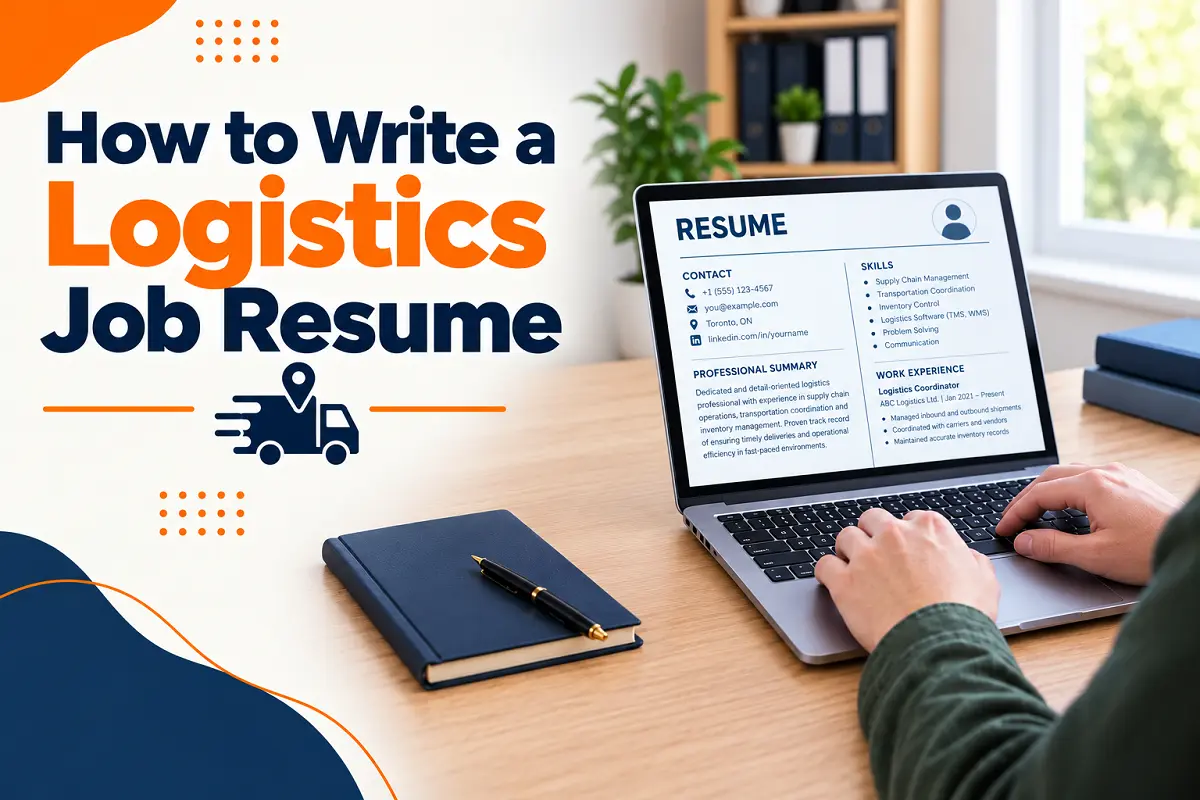
A strong logistics job resume can make a significant difference when applying for logistics, transportation, warehouse, and supply chain positions in Canada.
Employers want candidates who can demonstrate more than job titles. They look for relevant experience, operational knowledge, technical skills, reliability, and the ability to keep goods, inventory, and processes moving efficiently.
Depending on the position, valuable qualifications can include inventory management, transportation coordination, warehouse operations, supply chain knowledge, communication, organization, problem-solving, and safety awareness.
In this guide, we’ll explain how to write a logistics job resume that highlights your qualifications, showcases measurable achievements, and aligns with what Canadian employers look for in 2027.
We’ll also cover common resume mistakes to avoid and how HireLabour.ca can help you explore relevant logistics job opportunities.
What Should a Logistics Job Resume Highlight?
Your resume should make it easy for an employer to understand what you can contribute to a logistics operation.
Include:
- Contact information and a targeted professional summary.
- Logistics, transportation, warehouse, or supply chain experience.
- Measurable achievements involving orders, inventory, deliveries, or efficiency.
- Experience with inventory systems, WMS, TMS, or other relevant software.
- Education, training, and relevant certifications.
- Communication, organization, teamwork, and problem-solving skills.
- Safety knowledge and relevant equipment experience.
How to Write a Logistics Job Resume in 2027: Step-by-Step
1. Choose a Resume Format That Matches Your Logistics Experience
Use a clean, easy-to-read format that puts your most relevant experience where recruiters can find it quickly.
A chronological format can work well for candidates with consistent logistics experience. If you are changing careers or have limited experience, a skills-focused format can help emphasize transferable abilities.
Keep formatting consistent, use clear headings, and avoid excessive graphics that can interfere with applicant tracking systems.
2. Write a Strong Professional Summary for Logistics Roles
Your professional summary should quickly explain your experience, strongest skills, and target role.
For example:
Instead of writing: “Hardworking individuals seeking a logistics position.”
Use specific information: “Logistics coordinator with five years of experience in transportation scheduling, inventory control, and order fulfillment, with a strong record of improving delivery coordination and maintaining accurate inventory records.”
The second version gives employers a clearer reason to continue reading.
3. Highlight Your Logistics, Warehouse, and Supply Chain Experience
List relevant positions and explain what you accomplished rather than simply describing daily responsibilities.
For example:
Instead of: “Responsible for warehouse inventory.”
Consider: “Managed inventory records for 2,500+ SKUs and helped improve order-picking accuracy through regular stock checks.”
Where possible, include numbers related to:
- Orders processed
- Inventory accuracy
- Delivery times
- Shipment volume
- Warehouse capacity
- Cost savings
- Productivity improvements
- Team size
Specific results make your experience more credible and easier to evaluate.
4. Showcase Relevant Logistics Skills and Software Proficiency
Include technical skills that genuinely match your experience.
Depending on the position, these may include:
- Warehouse Management Systems (WMS)
- Transportation Management Systems (TMS)
- Inventory management software
- ERP platforms
- Shipping and receiving systems
- Microsoft Excel
- Barcode and scanning systems
- Route planning tools
Also include practical skills such as inventory control, order fulfillment, dispatch coordination, transportation planning, procurement support, and warehouse operations.
5. Include Your Education, Certifications, and Relevant Training
List your education along with logistics, supply chain, transportation, warehouse, or safety-related training.
Relevant credentials can vary considerably by position. For example, some logistics roles may value supply chain education, while warehouse positions may require specific equipment training.
Government of Canada Job Bank information notes that logistics specialist positions typically require post-secondary education in business or supply chain management, or extensive related experience. Requirements vary by occupation and employer.
If you have equipment certifications, safety training, transportation qualifications, or other relevant credentials, include them clearly.
6. Optimize Your Logistics Job Resume for Applicant Tracking Systems (ATS)
Many employers use applicant tracking systems to organize applications and identify resumes containing relevant qualifications.
Use terminology that genuinely reflects the job description. If the posting mentions “inventory control,” “order fulfillment,” “transportation coordination,” or “WMS,” and you have that experience, use the appropriate terminology in your resume.
Avoid keyword stuffing. The goal is to make your qualifications easy for both software and human recruiters to understand.
7. Tailor Your Resume to the Specific Logistics Position
A warehouse associate, transportation coordinator, logistics specialist, and supply chain supervisor do not have identical requirements.
For example, a warehouse-focused application should emphasize inventory handling, shipping, receiving, equipment, safety, and order fulfillment. A logistics coordinator position may require more emphasis on scheduling, documentation, transportation coordination, communication, and systems.
Tailoring your resume makes your application more relevant and can help employers quickly identify your suitability.
Logistics Resume Mistakes That Can Weaken Your Application
Avoid these common logistics resume mistakes:
- Using one resume for every logistics position.
- Listing responsibilities without measurable accomplishments.
- Omitting logistics software or technical skills.
- Failing to mention shipping, receiving, inventory, or order fulfillment experience.
- Including outdated or unrelated qualifications.
- Making spelling, formatting, or employment-history errors.
- Leaving out relevant safety training or equipment certifications.
- Using generic keywords that do not match the position.
Your resume should be concise, relevant, accurate, and focused on the role you want.
Explore Logistics Career Opportunities With Hire Labour
A strong resume is only one part of a successful job search. Finding positions that match your skills, experience, and qualifications is equally important.
Hire Labour helps connect job seekers with employment opportunities across Canada. For logistics candidates, matching your resume to the employer’s actual requirements can help ensure that your relevant experience is clearly presented.
Whether you are pursuing warehouse, transportation, logistics coordination, or supply chain opportunities, exploring logistics staffing solutions in Canada can provide a route to finding suitable positions.
Conclusion
A successful Logistics job resume should clearly communicate your experience, measurable accomplishments, technical abilities, education, certifications, and relevant workplace skills.
Avoid common resume mistakes, tailor each application to the position, and use terminology that accurately reflects the employer’s requirements. Most importantly, focus on what you achieved rather than simply listing what you were responsible for.
If you are looking for logistics employment opportunities, Hire Labour can help connect your skills and experience with relevant positions across Canada.
Contact Hire Labour today and take the next step toward finding a position that matches your qualifications.
Frequently Asked Questions
How long should a logistics job resume be?
For many candidates, one to two pages is sufficient. The ideal length depends on your experience. Focus on relevant logistics, warehouse, transportation, and supply chain experience rather than adding information simply to increase the page count.
How do I write a logistics job resume with no experience?
Focus on transferable skills, education, training, volunteer experience, internships, and relevant responsibilities from other jobs. Highlight skills such as organization, communication, inventory handling, teamwork, attention to detail, and problem-solving when they genuinely apply.
What skills should I include on a logistics resume?
Relevant skills can include inventory management, order fulfillment, transportation coordination, warehouse operations, scheduling, WMS, TMS, ERP systems, communication, time management, problem-solving, and attention to detail.
The exact skills should match the position.
Which certifications are useful for logistics jobs in Canada?
The most useful certification or training depends on the position. Candidates may benefit from relevant supply chain education, equipment training, transportation qualifications, workplace safety training, or other role-specific credentials.
Always check the employer’s requirements.
How can I avoid common logistics resume mistakes?
Tailor your resume to each position, check it carefully for errors, quantify achievements where possible, include relevant software and certifications, and remove information that does not support your application. Avoid exaggerating qualifications.
Where can I find logistics job opportunities in Canada?
You can find logistics job opportunities in Canada through staffing agencies like Hire Labour, which connect job seekers with positions that match their logistics skills, experience, knowledge, and qualifications.