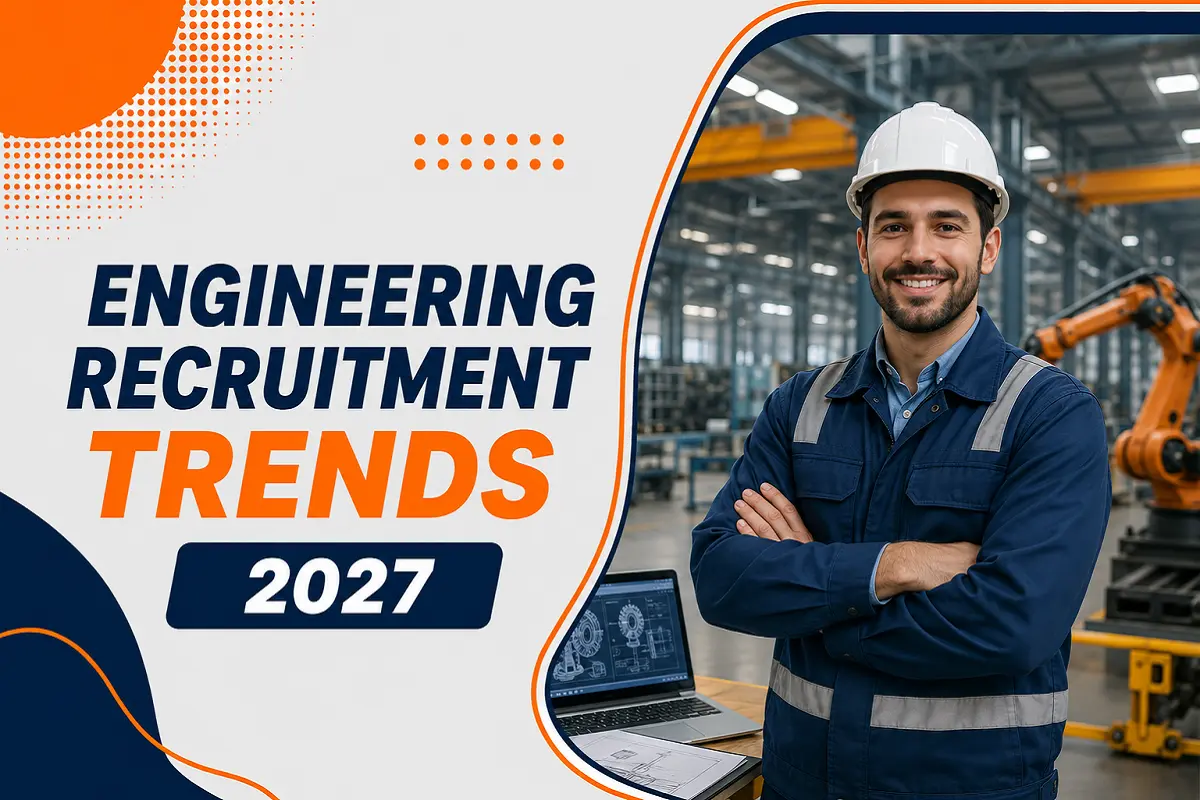
Canada’s engineering workforce is changing as employers deal with infrastructure projects, new technologies, skills shortages, and stronger competition for experienced professionals. Hiring an engineer with the right degree is no longer enough.
Employers increasingly need people who can apply technical knowledge, work with modern tools, adapt to changing project requirements, and solve practical problems.
This makes Engineering Recruitment Trends an important consideration for Canadian businesses planning their 2027 workforce. Employers that wait until a vacancy becomes urgent may find themselves competing for a limited pool of qualified candidates.
In this guide, we look at the key Engineering Recruitment Trends for 2027 employers should prepare for, along with practical ways for employers to adapt to the hiring changes and build stronger engineering teams.
Engineering Recruitment Trends Canadian Employers Should Watch in 2027
1. Demand for Specialized Engineering Talent Will Continue to Grow
Engineering is a broad field, and employers are becoming more specific about the expertise they need. Civil, mechanical, electrical, software, environmental, and industrial engineers can work on very different projects and in different industries.
For example, a construction company may need a civil engineer with infrastructure experience, while a manufacturer may require someone familiar with automation, production systems, or process improvement.
The challenge is not simply finding an engineer. It is finding someone whose experience matches the role’s actual requirements.
2. Engineering Employers Will Prioritize Digital and Technology Skills
Technology is changing how engineers design, test, monitor, and manage projects. Employers may increasingly look for professionals who are comfortable with engineering software, automation, data analytics, artificial intelligence, digital twins, and other digital tools.
This does not mean traditional engineering knowledge is becoming less important. Instead, employers want a combination of technical expertise and digital capability.
Canada’s Job Bank, for example, notes the growing importance of digital literacy and CAD software for civil engineering roles, while computer engineering outlooks point to continued demand connected to technologies such as AI, robotics, cloud computing, and advanced digital tools.
3. Skills-Based Hiring Will Become More Important
A degree shows that a candidate has completed formal education, but it does not always show what they can do on a real project.
Employers are increasingly looking at practical experience, technical competencies, certifications, project results, software knowledge, and problem-solving ability.
A stronger engineering job description should therefore separate essential skills from preferred qualifications. This gives employers a clearer way to assess candidates and prevents potentially strong applicants from being screened out simply because they do not match every requirement.
4. Competition for Experienced Engineers Will Intensify
Experienced engineers bring knowledge that takes years to develop. They understand project risks, technical standards, client expectations, workplace procedures, and how to make decisions when problems arise.
That experience comes at a premium.
Employers competing for senior engineering talent may need to offer more than a competitive salary. Career progression, meaningful projects, professional development, flexible work options, and a positive workplace culture can all influence whether an experienced engineer accepts an offer.
Some regional engineering markets already show how different conditions can be. For instance, Job Bank currently identifies a major labour shortage for mechanical engineers around Burnaby, while other regions and disciplines have more moderate or limited outlooks.
5. Demand for Engineers With Sustainability Expertise Will Increase
Sustainability is becoming part of engineering decisions across construction, manufacturing, energy, transportation, and infrastructure.
As projects place greater emphasis on energy efficiency, emissions reduction, environmental performance, renewable energy, and sustainable infrastructure, employers may seek engineers who understand these areas.
This creates opportunities for professionals who can combine core engineering knowledge with sustainability-focused experience.
6. Flexible Work Models Will Influence Engineering Recruitment
Not every engineering role can be performed remotely. Site supervision, laboratory work, manufacturing operations, and field engineering often require employees to be physically present.
However, many design, analysis, documentation, consulting, and project management responsibilities can offer some degree of flexibility.
Where practical, hybrid arrangements can help employers reach candidates outside their immediate geographic area. Flexibility can also make an employer more attractive to experienced professionals with multiple opportunities.
7. Engineering Employers Will Focus More on Retention
Hiring an engineer is only part of the challenge. Keeping that person is equally important.
When specialized employees leave, businesses lose technical knowledge and spend additional time and money recruiting replacements. Projects can also suffer when an experienced team member walks away midway through important work.
Employers should therefore focus on career progression, mentorship, professional development, recognition, compensation, and workload.
A clear path from junior engineer to senior or leadership positions can give employees a reason to build their careers within the organization rather than looking elsewhere.
8. Faster Engineering Recruitment Will Become a Competitive Advantage
A lengthy hiring process can cost an employer a strong candidate.
Engineers with in-demand skills may already be interviewing with several companies. If an employer takes weeks to schedule interviews, provide feedback, or approve an offer, the candidate may accept another opportunity.
A faster hiring process does not mean lowering standards. It means removing unnecessary delays.
Clear job descriptions, organized screening, fewer redundant interview stages, quick internal decisions, and regular candidate communication can make a significant difference.
9. Passive Engineering Candidates Will Become More Important
Some of the strongest engineering candidates are not actively applying for jobs.
They may already have stable positions, valuable project experience, and strong relationships with their current employers. They are unlikely to spend hours browsing job boards.
This is why proactive recruitment matters. Building relationships with engineering professionals before a vacancy becomes urgent can give employers access to candidates they would otherwise never reach.
Networking, professional communities, referrals, and specialized recruitment partners can all support this approach.
10. Contract and Project-Based Engineering Hiring Will Grow
Permanent hiring will remain important, but it is not the only option.
Businesses working on short-term projects, infrastructure programs, technology implementations, or temporary increases in workload may benefit from contract engineering professionals.
Contract staffing allows employers to bring in specialized expertise for a defined period without committing to a permanent position immediately. It can also help businesses respond quickly when a project requires skills that are not currently available within the internal team.
How Canadian Employers Can Prepare for Engineering Recruitment in 2027
Build Skills-Based Engineering Job Descriptions
Start with what the engineer actually needs to accomplish.
Identify essential technical skills, certifications, software experience, industry knowledge, and project experience. Avoid filling job descriptions with unnecessary requirements that can discourage qualified candidates from applying.
Develop a Proactive Engineering Talent Pipeline
Don’t wait until a project is already underway to start searching.
Maintain relationships with engineers who could potentially fit future roles. A talent pipeline can reduce pressure when a vacancy suddenly appears and give hiring teams more options.
Strengthen Your Employer Value Proposition
Experienced engineers have choices.
Show candidates why they should join your organization. Highlight interesting projects, career development, workplace culture, compensation, flexibility, mentorship, and opportunities to take on greater responsibility.
Streamline the Hiring Process
Review every step of your recruitment process and ask whether it is necessary.
If candidates are completing multiple interviews that cover the same information, consider consolidating them. Give hiring managers clear decision-making responsibilities and keep candidates informed throughout the process.
Consider Flexible Engineering Staffing Solutions
Different projects require different workforce models.
Permanent employees may be ideal for core positions, while contract or temporary professionals can help with specialized projects, workload increases, or short-term vacancies. Using the right model can make workforce planning more responsive.
How Hire Labour Can Help Canadian Employers Find Engineering Talent
Finding specialized engineering professionals can take significant time, particularly when internal recruitment teams are already managing multiple vacancies.
HireLabour.ca can help Canadian employers:
- Access qualified engineering candidates across Canada.
- Recruit for permanent and flexible engineering positions.
- Identify candidates based on technical skills, experience, qualifications, and project requirements.
- Support businesses searching for specialized engineering professionals.
- Respond to urgent or high-demand engineering hiring needs.
- Reduce the internal time required to source and screen candidates.
- Build more flexible engineering teams as project and business requirements change.
For employers facing difficult-to-fill engineering positions, working with a specialized staffing partner can add another route to qualified talent while allowing internal teams to focus on their core responsibilities.
Conclusion
The Engineering Recruitment Trends shaping 2027 point toward a more targeted and proactive approach to hiring. Specialized technical skills, digital capabilities, sustainability knowledge, practical experience, flexible work, and faster recruitment will all influence how Canadian employers compete for engineering talent.
Waiting until an engineering vacancy becomes urgent can make it harder to search. Employers should instead build talent pipelines, improve their hiring processes, strengthen their employee value proposition, and consider permanent, temporary, and contract staffing options based on their needs.
The goal is not simply to fill an engineering position. It is to find professionals who can contribute to projects, adapt as technology changes, and grow with the organization.
Need help finding qualified engineering professionals in Canada? Hire Labour connects employers with skilled talent through engineering recruitment solutions.
Contact our team today to discuss your engineering hiring needs!
People Also Ask
What are the biggest engineering recruitment trends in Canada for 2027?
The biggest trends include greater demand for specialized expertise, stronger emphasis on digital skills, skills-based hiring, sustainability knowledge, flexible work, proactive recruitment, faster hiring, and increased use of contract engineering talent.
Which engineering skills will be most in demand in Canada in 2027?
Demand will vary by industry and region, but employers are likely to value strong technical expertise alongside digital skills, data analysis, engineering software, automation knowledge, sustainability experience, problem-solving, and adaptability.
How can Canadian companies attract experienced engineers?
Competitive compensation is important, but it is only one part of the equation. Companies can also attract experienced engineers by offering meaningful projects, career advancement, professional development, flexible work arrangements, strong leadership, and a positive workplace culture.
Should companies use contract engineers for specialized projects?
Contract engineers can be a practical option when businesses need specialized expertise for a defined project, temporary workload increase, or urgent skills gap. The right approach depends on the project’s duration, technical requirements, and long-term workforce plans.
How can an engineering staffing agency help with engineering recruitment?
A trusted engineering staffing agency can help source candidates, screen qualifications and experience, identify professionals who match specific requirements, and support permanent or flexible hiring. This can reduce the time internal teams spend searching for specialized engineering talent.