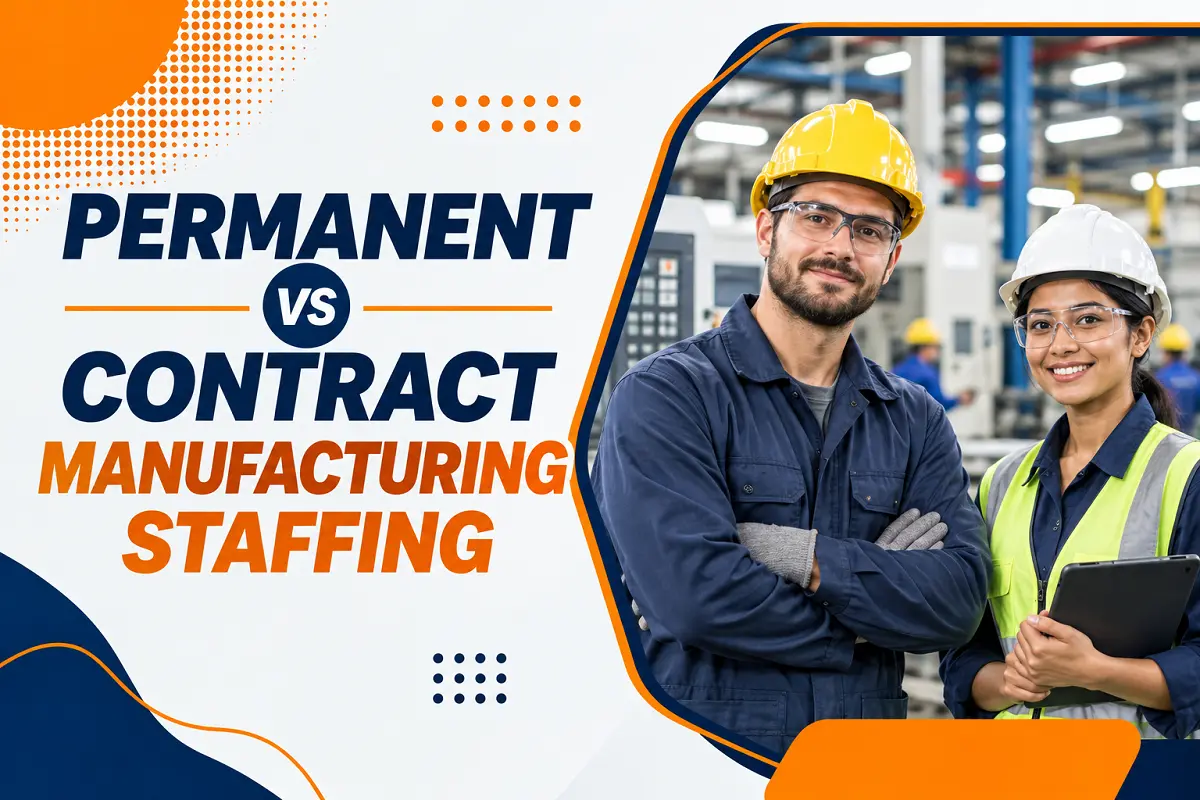
A strong workforce is the backbone of any successful manufacturing operation. From production workers and machine operators to quality inspectors and supervisors, having the right people in the right roles can make a major difference in productivity, efficiency, and meeting production schedules.
But when your workforce needs change, should you hire permanent employees or contract workers?
For Canadian manufacturers, the answer depends on factors such as production volume, project requirements, labour demand, budget, skills, and long-term business goals.
Canada’s manufacturing sector employs more than 1.5 million workers and continues to evolve as manufacturers adopt new technologies and respond to changing market demands.
Understanding permanent vs contract manufacturing staffing can help employers choose a workforce model that fits their current needs while providing the flexibility to adapt as those needs change.
In this guide, we’ll compare permanent vs contract manufacturing staffing, including the key differences, benefits, and when to use each hiring model.
We’ll also explain how to choose the right staffing solution for your business and how Hire Labour can help you connect with skilled manufacturing professionals.
What Is Permanent Manufacturing Staffing?
Permanent manufacturing staffing involves hiring employees for ongoing positions within a company’s workforce. These employees are generally hired with the expectation that they will remain with the organization for the long term, subject to normal employment conditions.
Permanent employees can support core manufacturing operations and develop valuable knowledge about a company’s equipment, processes, quality standards, and production requirements.
Common permanent manufacturing positions include:
- Production workers
- Machine operators
- CNC operators
- Assemblers
- Quality control inspectors
- Warehouse workers
- Maintenance technicians
- Production supervisors
Permanent employees can become an important part of long-term workforce planning, particularly when production requirements remain relatively stable throughout the year.
What Is Contract Manufacturing Staffing?
Contract manufacturing staffing involves hiring workers for a defined period, project, production requirement, or temporary workforce need.
Contract workers can help manufacturers respond to changes in production demand without making every workforce increase permanent. Depending on the arrangement, workers may be brought in for several weeks, months, a specific project, seasonal demand, or temporary coverage.
For example, a manufacturer may need additional assemblers when a large customer order arrives. A distribution operation may need extra warehouse workers during a seasonal peak. A company launching a new production line may also need additional machine operators while establishing the operation.
Contract staffing gives employers more flexibility when workforce needs are expected to change.
Permanent vs Contract Manufacturing Staffing: Key Differences
| Factor | Permanent Staffing | Contract Staffing |
| Employment duration | Long-term | Defined or temporary period |
| Production needs | Consistent, ongoing demand | Short-term, seasonal, or changing demand |
| Workforce flexibility | Lower | Higher |
| Hiring speed | Can take longer | Often faster through staffing partners |
| Cost | Designed for long-term workforce needs | Useful when avoiding long-term commitments |
| Training | Greater opportunity for long-term development | Focused on role and immediate requirements |
| Skills and experience | Builds internal knowledge over time | Provides access to specific skills when needed |
| Workforce planning | Supports stable workforce structures | Supports changing workforce requirements |
Neither option is automatically better. The right choice depends on what the business needs from its workforce today and what it expects to need in the future.
Benefits of Permanent Manufacturing Staffing
Build a Stable Production Workforce
Permanent employees provide continuity across manufacturing operations. When workers remain with the organization, teams can become familiar with production processes, equipment, quality expectations, and workplace procedures.
This consistency can be particularly valuable for manufacturers with stable year-round production.
Retain Manufacturing Skills and Experience
Experienced employees develop knowledge that can be difficult to replace. They may understand specific machinery, production workflows, quality requirements, and common operational problems.
Retaining this knowledge can reduce disruption from repeated worker turnover.
Improve Production Consistency
A stable workforce can make it easier to maintain consistent processes and team communication. Employees who understand the organization’s procedures may require less ongoing orientation than newly hired workers.
Reduce Long-Term Hiring Costs
Although permanent employees involve ongoing employment costs, retaining workers over the long term can reduce the repeated recruitment and onboarding associated with frequent workforce changes.
Strengthen Team Collaboration
Permanent teams have more time to develop working relationships. This can support communication between production, maintenance, quality control, warehouse, and supervisory teams.
Benefits of Contract Manufacturing Staffing
Scale the Workforce Quickly During Peak Production
Contract workers can help manufacturers increase staffing when orders or production volumes rise.
This can be especially useful when the increase in demand is temporary and does not justify creating permanent positions.
Cover Employee Absences
Illness, vacation, turnover, or other unexpected absences can leave manufacturers short-staffed.
Contract workers can provide temporary coverage and help maintain operations while permanent employees are unavailable.
Access Skilled Manufacturing Workers Without Long-Term Commitment
Some projects require workers with specific technical or production experience. Contract staffing gives employers access to those skills without requiring them to create a permanent role.
Canada is also dealing with evolving manufacturing skill requirements. The Government of Canada’s recent Advanced Manufacturing Workforce Alliance specifically identifies skills shortages, technology adoption, automation, robotics, and AI as workforce challenges facing the sector.
Meet Short-Term Project Demands
Contract workers can support temporary production runs, facility changes, equipment installations, new product launches, or other projects requiring additional labour.
When Should You Choose Permanent Manufacturing Staffing?
Permanent staffing may be the better option when your business has:
- Consistent year-round production
- Long-term workforce requirements
- Core manufacturing positions
- A need to retain experienced workers
- Ongoing operational responsibilities
- Positions requiring significant training
- Strong expectations for internal career development
For example, a CNC operator responsible for an important long-term production process may be better suited to a permanent position when the role remains consistently necessary.
Permanent staffing can also make sense when an employee’s knowledge of internal processes becomes increasingly valuable over time.
When Should You Choose Contract Manufacturing Staffing?
Contract staffing can be particularly useful when you have:
- Seasonal production increases
- Short-term projects
- Temporary labour shortages
- Sudden increases in customer demand
- New production lines or facilities
- Temporary employee absences
- Short-term specialized skill requirements
For example, a manufacturer may use contract workers to support a production increase for several months before returning to its normal workforce level.
This flexibility can help businesses respond to changing demand without making every workforce adjustment permanent.
How to Choose the Right Manufacturing Staffing Model
Evaluate Your Production Demand
Start by determining whether your workforce requirement is temporary or ongoing.
If production is consistently high year-round, permanent hiring may make more sense. If demand changes significantly by season or project, contract staffing may provide greater flexibility.
Identify the Manufacturing Skills You Need
Consider the specific skills required for the position.
Some roles can be filled through general production experience and workplace training. Others may require technical knowledge, equipment experience, certifications, or specialized manufacturing skills.
Consider Your Workforce Timeline
If you need workers immediately, a contract staffing solution may help you respond faster, especially when working with a staffing agency that already has access to candidates.
If the position is part of long-term workforce planning, permanent recruitment may be more appropriate.
Assess Your Staffing Budget
Look beyond the immediate hiring cost. Consider recruitment, onboarding, training, turnover, overtime, productivity, and the long-term value of retaining experienced employees.
The least expensive option on paper is not always the most cost-effective option for the business.
Determine Your Long-Term Labour Requirements
Ask whether the position will still be required six months or one year from now.
If the answer is yes, permanent employment may provide greater stability. If the requirement is uncertain, contract staffing can reduce the risk of committing to a long-term workforce increase.
Consider Seasonal and Production Fluctuations
Manufacturers with significant changes in demand may benefit from combining both models.
A core permanent workforce can handle regular production while contract workers provide additional capacity during busy periods.
How Hire Labour Can Help With Manufacturing Staffing
Choosing between permanent and contract staffing doesn’t have to be an either-or decision. The right approach can depend on your production needs, workforce demand, and business goals.
Hire Labour helps Canadian manufacturers connect with qualified workers for a wide range of roles and staffing requirements. Our manufacturing staffing services support both permanent and contract hiring, giving businesses the flexibility to scale their workforce as demand changes.
Whether you need production workers, skilled labourers, machine operators, warehouse staff, or other manufacturing professionals, we can help you find candidates based on their skills, experience, availability, and job requirements.
With the right staffing support, manufacturers can fill vacancies more efficiently and respond to changing production demands while keeping operations moving.
Wrap Up
There is no single answer when comparing permanent vs contract manufacturing staffing. The right approach depends on production demand, required skills, workforce timelines, budget, seasonal fluctuations, and long-term business objectives.
Permanent staffing can provide stability, employee continuity, stronger team relationships, and long-term retention of manufacturing knowledge. Contract staffing can provide flexibility when production increases, projects arise, employees are absent, or specialized skills are needed temporarily.
For many Canadian manufacturers, the most practical approach may be a combination of both.
The key is to match the staffing model to the actual workforce requirement rather than using the same approach for every position.
Need help finding the right manufacturing workers? Contact Hire Labour today to discuss your workforce needs and connect with qualified manufacturing professionals.
FAQs
Can manufacturers use both permanent and contract workers?
Yes. Many manufacturers can benefit from maintaining a permanent workforce for core operations while using contract workers during seasonal peaks, temporary shortages, or short-term projects.
How can staffing agencies help manufacturers reduce hiring challenges?
Staffing agencies can help businesses source and screen candidates, reduce recruitment time, and provide access to workers who match specific skills and availability requirements.
Is contract manufacturing staffing more cost-effective?
It can be useful when workforce demand is temporary because businesses can increase staffing without committing to a permanent position. However, cost-effectiveness depends on the role, duration, pay structure, recruitment requirements, and business needs.
Can contract manufacturing workers become permanent employees?
Yes. Depending on the staffing arrangement, contract manufacturing workers can transition into permanent employees. Contract-to-permanent hiring allows employers to assess a worker’s skills, performance, and fit for the role before making a long-term hiring decision.
How can manufacturers improve employee retention?
Manufacturers can improve employee retention by offering competitive compensation, safe working conditions, training opportunities, clear career paths, and a positive workplace environment.
Understanding employee needs and addressing workforce challenges can also help reduce turnover.
What are the latest manufacturing staffing trends in Canada?
Key manufacturing staffing trends include increased demand for skilled workers, greater use of contract and flexible staffing, workforce shortages, and the growing need for employees with technology and automation skills.
These trends are encouraging manufacturers to adopt more flexible hiring strategies.