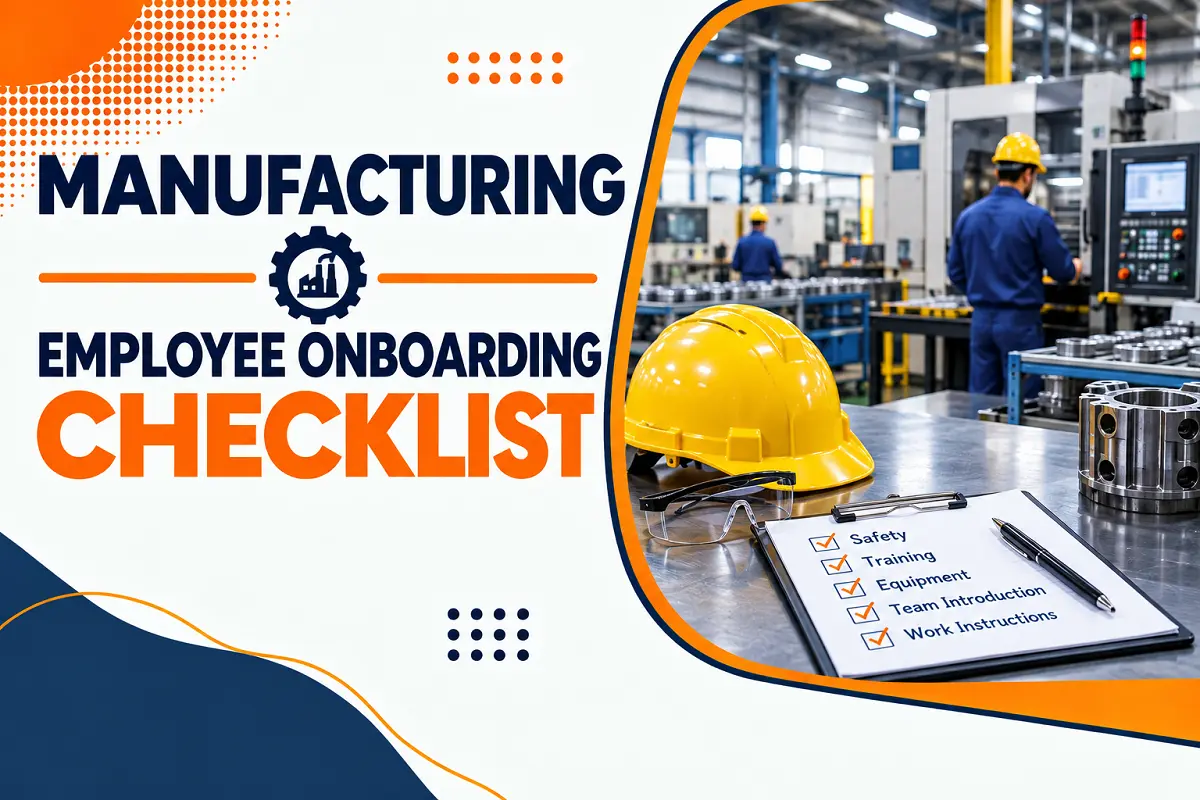
Hiring reliable manufacturing employees is only the first step. New workers also need to understand their responsibilities, production processes, equipment, quality standards, and workplace safety requirements before working independently.
A structured manufacturing employee onboarding checklist helps employers prepare new hires, organize training, and establish clear expectations from the beginning.
Effective onboarding can reduce avoidable production errors, equipment misuse, safety risks, and operational delays while helping employees become confident in their roles.
In this guide, we will cover a practical manufacturing employee onboarding checklist that Canadian employers can follow in 2027 to prepare new hires, deliver role-specific training, and support their progress during the first 90 days.
We will also highlight common onboarding mistakes to avoid and explain how HireLabour.ca can help employers find reliable manufacturing employees across Canada.
Why Is Manufacturing Employee Onboarding Important?
Manufacturing environments involve machinery, production targets, material handling, and strict quality requirements. Without proper instruction, employees may misunderstand procedures or perform tasks incorrectly.
A structured onboarding process helps employers:
- Explain job duties, shift schedules, and production targets.
- Introduce workplace health and safety procedures.
- Familiarize workers with machinery, tools, and production lines.
- Explain quality-control standards and defect reporting.
- Establish clear communication with supervisors and teammates.
- Reduce the risk of injuries, production errors, and equipment damage.
- Help employees develop confidence and practical skills.
Manufacturing Employee Onboarding Checklist for 2027
Follow this manufacturing employee onboarding checklist for 2027 to organize the process from pre-employment preparation to ongoing performance reviews.
1. Complete Employment and Pre-Employment Requirements
- Collect required employment, payroll, and benefits documentation.
- Verify relevant qualifications, licenses, and certifications.
- Provide the employee handbook and workplace policies.
- Explain attendance, scheduling, and conduct expectations.
- Complete required site-specific documentation.
2. Prepare the Work Area and Equipment
- Assign the employee to the appropriate workstation or production line.
- Prepare tools, uniforms, supplies, and required personal protective equipment (PPE).
- Arrange identification badges and timekeeping access.
- Confirm the work area and equipment are ready.
- Explain how to report damaged or malfunctioning equipment.
3. Introduce the Employee to the Facility
- Provide a tour of the manufacturing facility.
- Introduce supervisors, teammates, maintenance staff, and key contacts.
- Identify first-aid stations, washrooms, break rooms, and emergency exits.
- Explain restricted areas and access procedures.
- Review daily routines and facility rules.
4. Explain Job Duties and Production Responsibilities
- Review the job description and primary responsibilities.
- Explain production schedules, shift expectations, and priorities.
- Clarify performance standards and production targets.
- Identify the reporting supervisor and escalation process.
- Explain how the employee’s work contributes to production.
5. Provide Workplace Health and Safety Training
- Review general workplace safety procedures.
- Explain task-specific and machine-specific hazards.
- Demonstrate proper PPE use.
- Review emergency procedures, evacuation routes, and incident reporting.
- Explain lockout/tagout procedures where applicable.
- Teach employees how to report hazards, injuries, near misses, and unsafe conditions.
Employers should follow the applicable provincial or territorial requirements. The Canadian Centre for Occupational Health and Safety’s machine safety guidance provides useful information on machine hazards and protective measures.
6. Train Employees on Machinery and Equipment
- Demonstrate safe equipment operation.
- Explain startup, shutdown, cleaning, and operating procedures.
- Provide supervised hands-on practice.
- Explain warning signs and fault-reporting procedures.
- Confirm competence before allowing independent operation.
7. Explain Production and Quality-Control Procedures
- Introduce product specifications and quality standards.
- Demonstrate relevant inspection and testing procedures.
- Explain how to identify and report defects.
- Review how to handle rejected or non-conforming products.
- Explain production records and quality documentation.
8. Review Production Workflows
- Explain standard operating procedures (SOPs).
- Review material handling and inventory processes.
- Establish workstation cleanliness and housekeeping expectations.
- Introduce shift handovers and production reporting.
- Explain how to report delays or workflow problems.
9. Provide Hands-On, Role-Specific Training
- Demonstrate tasks before expecting employees to perform them independently.
- Pair new hires with experienced workers or trainers where appropriate.
- Allow supervised practice.
- Increase responsibilities as competence improves.
- Provide timely feedback and correct mistakes.
10. Set Performance and Attendance Expectations
- Explain productivity, quality, safety, and teamwork expectations.
- Set realistic goals for the first few weeks.
- Explain how performance will be measured.
- Clarify shifts, breaks, overtime, and attendance procedures.
- Establish 30-, 60-, and 90-day objectives where appropriate.
11. Schedule Follow-Up Reviews
- Check in after the first few shifts.
- Ask about questions or difficulties with equipment and procedures.
- Review safety and performance concerns with the supervisor.
- Arrange additional training where necessary.
- Conduct progress reviews at 30, 60, and 90 days.
Common Manufacturing Employee Onboarding Mistakes to Avoid
Even well-organized employers can overlook important steps. Avoid these common mistakes:
- Allowing machinery operation before completing required training.
- Failing to provide appropriate PPE or explain how to use it.
- Overlooking site-specific safety hazards.
- Assuming employees understand procedures without practical instruction.
- Failing to explain quality standards and defect reporting.
- Assigning independent work before demonstrating competence.
- Leaving shift and attendance expectations unclear.
- Failing to document completed training.
- Providing insufficient supervision during the first few shifts.
- Treating onboarding as a one-day orientation rather than an ongoing process.
How Hire Labour Can Help Employers Find Manufacturing Employees
Hiring the right manufacturing employees is the first step toward building a productive workforce and ensuring a smooth onboarding process.
Hire Labour helps Canadian employers find candidates for manufacturing and operational roles, including production workers, assemblers, machine operators, warehouse staff, and other manufacturing-related positions.
Whether you need to fill urgent vacancies, expand your production team, or recruit workers with specific technical skills, our manufacturing staffing services are tailored to your business needs. By connecting you with suitable candidates, we help you address hiring challenges, maintain production efficiency, and build a reliable workforce.
Conclusion
A well-planned manufacturing employee onboarding checklist helps Canadian employers prepare new hires to work safely, follow production procedures, maintain quality standards, and meet performance expectations.
By following a structured checklist, providing hands-on training, and conducting regular progress reviews during the first 90 days, businesses can support employee development and build a more reliable workforce.
However, successful onboarding starts with hiring the right people. Hire Labour helps Canadian businesses find manufacturing employees whose skills and experience align with their operational needs.
Looking to strengthen your manufacturing workforce? Contact Hire Labour today to discuss your hiring requirements and explore our manufacturing staffing solutions in Canada to find suitable candidates for your business.
Frequently Asked Questions
What safety training should new manufacturing employees receive?
Training should cover workplace hazards, PPE, emergency procedures, incident reporting, and the specific risks associated with the employee’s tasks. Machine-specific training and lockout/tagout instruction should be provided where applicable.
How should employers train new employees to operate manufacturing equipment?
Employers should demonstrate operating procedures, explain hazards, provide supervised hands-on practice, and assess competence before authorizing independent operation.
How long should manufacturing employee onboarding take?
The duration depends on the role, equipment, workplace hazards, and complexity of the tasks. Some orientation may happen on the first day, but technical training and performance reviews may continue for several weeks or months.
How can employers help new manufacturing employees become productive?
Provide clear instructions, practical training, realistic goals, accessible supervisors, and regular feedback. Gradually increase responsibilities as employees demonstrate competence.
What qualifications should employers look for when hiring manufacturing workers?
Qualifications depend on the position. Employers may consider relevant production experience, technical skills, safety awareness, equipment knowledge, certifications, reliability, and the ability to follow procedures.
How can Hire Labour help Canadian employers find manufacturing employees?
Hire Labour supports employers with manufacturing recruitment needs, helping identify candidates whose skills and experience align with production, assembly, machine operation, warehouse, and other relevant positions.