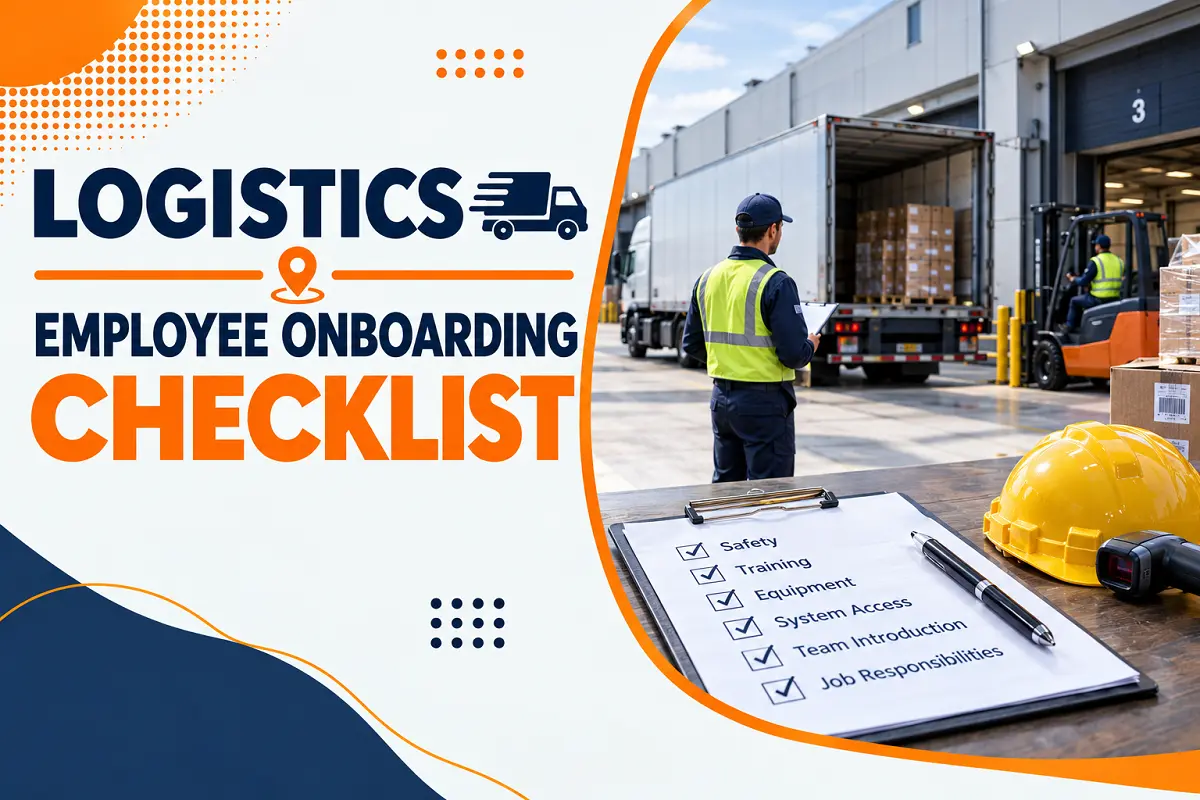
Logistics operations depend on employees who understand their responsibilities, workplace procedures, and service expectations. Whether they work in a warehouse, distribution center, shipping department, or transportation team, new employees need practical training before they can work safely and accurately.
A structured logistics employee onboarding checklist helps employers introduce new hires to inventory systems, order fulfillment, shipping, receiving, equipment, and communication workflows. Proper onboarding can also help reduce avoidable injuries, shipping errors, damaged goods, delays, and inventory discrepancies.
This guide outlines a step-by-step logistics employee onboarding checklist for Canadian employers in 2027, covering new hire orientation, workplace safety, inventory procedures, and role-specific training throughout the first 90 days.
You’ll also learn about common onboarding challenges to avoid and how HireLabour.ca can help businesses across Canada recruit qualified logistics employees to support their warehouse, transportation, and distribution operations.
Why Is Logistics Employee Onboarding Important?
Logistics environments often involve tight schedules, moving equipment, physical handling, and coordination between multiple teams. New employees need to understand how their work affects productivity, inventory accuracy, delivery schedules, and customer satisfaction.
Effective onboarding helps employers:
- Clarify job duties and daily priorities.
- Introduce safety and material-handling procedures.
- Explain warehouse and transportation systems.
- Reduce errors in picking, packing, shipping, and documentation.
- Establish communication and reporting procedures.
- Help employees become confident and productive.
The Canadian Center for Occupational Health and Safety explains that worker orientation and training help prevent incidents and prepare employees to perform tasks safely.
Logistics Employee Onboarding Checklist for 2027
Follow this logistics employee onboarding checklist for 2027 to guide new hires through each stage, from preboarding and safety training to hands-on instruction and performance evaluations.
1. Complete Employment and Preboarding Requirements
- Complete employment, payroll, benefits, and required documentation.
- Verify relevant licenses, certifications, and qualifications.
- Review company policies and the employee handbook.
- Explain attendance, shifts, overtime, and workplace conduct.
- Complete required site-access and security documentation.
2. Prepare Equipment and System Access
- Assign the employee to the correct warehouse, transportation, or logistics team.
- Prepare uniforms, PPE, scanners, tools, and other equipment.
- Set up access to inventory, warehouse management, or scheduling systems.
- Provide identification, access cards, and timekeeping credentials.
- Check that equipment and work areas are ready.
3. Introduce the Workplace and Team
- Tour the warehouse, distribution center, loading areas, and relevant workspaces.
- Introduce supervisors, dispatchers, drivers, and team members.
- Identify first-aid stations, emergency exits, washrooms, and break areas.
- Explain restricted areas and access procedures.
- Review communication channels and daily routines.
4. Explain Job Duties and Performance Expectations
- Review the job description and daily responsibilities.
- Explain receiving, inventory, picking, packing, shipping, or delivery duties.
- Discuss schedules, productivity targets, and service standards.
- Explain how to report delays, missing items, and damaged goods.
- Clarify how the employee’s role supports the wider supply chain.
5. Provide Health and Safety Training
- Review workplace hazards and applicable safety procedures.
- Train employees in safe lifting, material handling, and ergonomics.
- Explain PPE requirements and proper use.
- Cover loading dock, warehouse traffic, and equipment safety.
- Review emergency exits, evacuation, and incident reporting.
- Explain how to report hazards, injuries, and near misses.
Employers should follow the occupational health and safety requirements that apply to their jurisdiction and workplace. For federally regulated workplaces, the Government of Canada’s workplace health and safety guidance outlines employer responsibilities for providing appropriate information, training, and supervision.
6. Train Employees on Equipment
- Provide role-specific instruction for pallet jacks, forklifts, scanners, conveyors, or other equipment.
- Explain inspection, safe operation, charging, and storage procedures.
- Provide supervised hands-on practice.
- Confirm that employees understand equipment limitations.
- Verify required qualifications or authorization before independent operation.
Employees should not operate equipment independently until they have received the required training and authorization.
7. Explain Inventory and Order Fulfilment
- Demonstrate receiving, storage, picking, packing, labelling, and shipping procedures.
- Explain stock-location and inventory-tracking systems.
- Train employees on barcode scanners and warehouse software.
- Explain how to handle damaged, missing, incorrect, or returned goods.
- Review shipping records and documentation requirements.
8. Review Transportation and Communication Procedures
- Explain dispatch, routing, scheduling, and delivery processes.
- Review how to communicate delays, route changes, and delivery issues.
- Explain required shipping and transportation documents.
- Establish escalation procedures for operational problems.
- Train employees to provide accurate status updates.
9. Provide Hands-On Training
- Demonstrate regular tasks and workflows.
- Pair the employee with an experienced colleague or supervisor.
- Allow supervised practice before assigning independent work.
- Increase responsibilities as competence improves.
- Provide timely feedback and correct errors early.
10. Set Expectations and Schedule Follow-Ups
- Establish expectations for safety, accuracy, productivity, attendance, and teamwork.
- Explain how performance will be measured.
- Set practical goals for the first few weeks.
- Review shift schedules, breaks, and attendance procedures.
- Schedule check-ins after the first few shifts and formal 30-, 60-, or 90-day reviews as appropriate.
Use these follow-ups to address training gaps, resolve workflow challenges, answer questions, and ensure employees can perform their logistics duties safely, accurately, and efficiently.
Common Logistics Employee Onboarding Mistakes to Avoid
Even a well-planned hiring process can fall short if onboarding is rushed. Employers should avoid:
- Providing orientation without practical training.
- Allowing untrained employees to operate equipment.
- Overlooking warehouse traffic and lifting safety.
- Failing to explain inventory and documentation procedures.
- Leaving employees unsure how to report problems.
- Assigning full responsibility before employees understand workflows.
- Ignoring system training and performance expectations.
- Failing to provide ongoing supervision.
Onboarding should be a process, not simply a first-day presentation.
How Hire Labour Can Help Employers Find Logistics Employees
Finding the right logistics employees is essential for keeping your warehouse, transportation, and distribution operations running smoothly.
Hire Labour offers logistics staffing solutions in Canada to help businesses connect with suitable candidates for their workforce needs.
Whether you need warehouse workers, material handlers, shipping and receiving staff, drivers, or dispatchers, we can help you find candidates whose skills and experience align with your operational requirements.
Conclusion
A well-structured logistics employee onboarding checklist helps Canadian employers prepare new hires for workplace safety, inventory management, order fulfilment, and daily operational responsibilities.
By following this checklist, businesses can establish clear expectations, improve training consistency, and help employees perform their duties safely and efficiently.
However, successful onboarding starts with the right recruitment. Hiring candidates whose skills and experience match your operational needs makes it easier to deliver effective training and build a reliable logistics team.
If you’re looking to strengthen your logistics team, Hire Labour can help. Contact us today to discuss your hiring requirements and find the right talent to support your business.
Frequently Asked Questions
What safety training should new logistics employees receive?
Training should cover workplace hazards, PPE, safe lifting, material handling, emergency procedures, incident reporting, and any role-specific risks. Requirements depend on the job, equipment, and applicable jurisdiction.
How should employers train employees to use warehouse equipment?
Provide equipment-specific instruction, explain inspection and operating procedures, and arrange supervised hands-on practice. Confirm required qualifications or authorization before allowing independent operation.
How long should logistics employee onboarding take?
It depends on the role and its risks. Basic orientation may take a day, but equipment training, system instruction, and performance development can require several weeks or longer.
How can employers reduce inventory and shipping errors during onboarding?
Demonstrate scanning, picking, packing, labelling, documentation, and exception-handling procedures. Supervise early tasks, check accuracy, and correct recurring mistakes promptly.
What qualifications should employers look for when hiring logistics workers?
Requirements vary by role. Employers may assess relevant experience, attention to detail, reliability, communication, physical task requirements, system familiarity, and applicable licences or certifications.
How can Hire Labour help Canadian employers find logistics employees?
Hire Labour can support permanent and contract recruitment for logistics-related roles, helping employers identify candidates whose experience and skills align with their operational requirements.