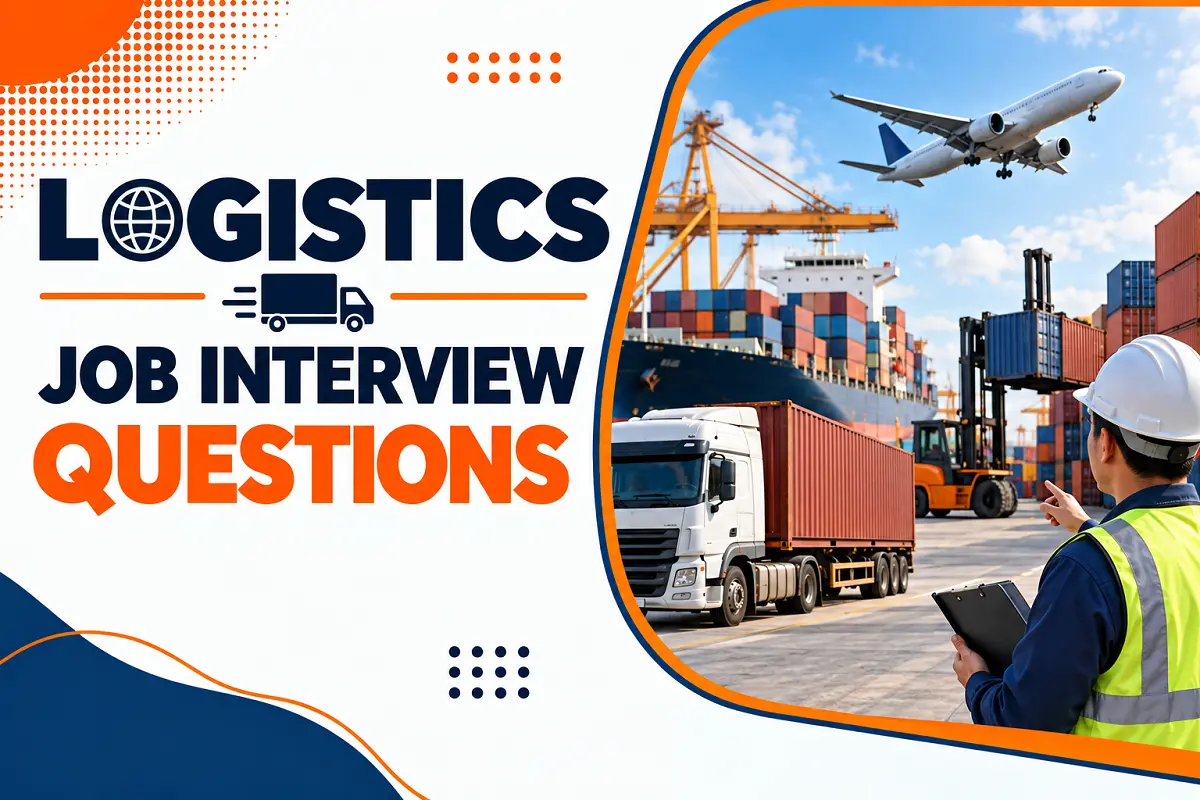
Preparing for a logistics job interview involves more than reviewing your resume. Employers may assess your knowledge of transportation, warehousing, inventory, supply chain processes, technology, safety, and customer service.
Reviewing top logistics job interview questions can help you prepare specific, relevant answers instead of trying to improvise during the interview.
In this guide, we’ll cover what logistics employers look for, how to prepare for your interview, common questions, answering strategies, mistakes to avoid, questions to ask the interviewer, and how Hire Labour can help you find logistics roles across Canada.
What Logistics Employers Look for in Candidates
Depending on the position, employers may look for:
- Knowledge of logistics, transportation, warehousing, and supply chain processes
- Strong organization and time management
- Shipment and delivery coordination skills
- Problem-solving and decision-making abilities
- Attention to detail with orders, documents, and inventory
- Communication and teamwork
- Ability to manage pressure and changing priorities
- Familiarity with logistics software and tracking systems
- Understanding of safety, compliance, and transportation procedures
- Ability to work with suppliers, carriers, customers, and warehouse teams
The importance of technology is also growing. Government of Canada Job Bank information notes that technological advances in logistics are affecting transportation efficiency, including the use of navigation and communication systems.
How to Prepare for a Logistics Job Interview in 2027
Start by researching the employer and understanding its logistics operations, customers, services, warehouses, transportation network, or supply chain activities.
Then review the job description carefully. Identify the skills and qualifications the employer emphasizes and prepare examples that demonstrate them.
Refresh your knowledge of transportation, inventory, warehousing, shipping, and supply chain terminology. If the position involves a Transportation Management System (TMS), Warehouse Management System (WMS), or another platform, review the systems you have actually used.
Also prepare examples involving delays, inventory discrepancies, scheduling problems, urgent orders, customer complaints, and coordination between teams.
For logistics roles involving dangerous goods, candidates should also review the applicable training and regulatory requirements to understand what may be expected for the position.
Top Logistics Job Interview Questions for 2027
General Logistics Interview Questions
Prepare for questions such as:
- Tell me about yourself and your logistics experience.
- Why are you interested in a career in logistics?
- Why do you want to work for our company?
- What interests you about this position?
- What are your strongest logistics skills?
- What do you understand about our supply chain operations?
- Why should we hire you?
Logistics and Supply Chain Knowledge Questions
Employers may ask:
- What is the role of logistics within a supply chain?
- What are the main functions of logistics management?
- What is the difference between logistics and supply chain management?
- What factors do you consider when planning a shipment?
- How do you coordinate transportation between suppliers, warehouses, and customers?
- How can a company improve logistics efficiency?
- How do you control logistics costs while maintaining service levels?
Transportation and Shipping Questions
Prepare for questions such as:
- What experience do you have coordinating shipments?
- How do you work with transportation providers?
- What would you do if a shipment was delayed?
- How do you track shipments and communicate delivery updates?
- What shipping documents have you worked with?
- How do you manage multiple deliveries with different deadlines?
- What would you do if a carrier missed a scheduled pickup?
Inventory and Warehouse Logistics Questions
Employers may ask:
- What experience do you have with inventory management?
- How do you maintain accurate inventory records?
- What would you do if physical inventory did not match system records?
- How do warehouse operations affect logistics performance?
- How do you prioritize urgent orders?
- How can picking, packing, and shipping errors be reduced?
- How have you worked with warehouse teams to improve efficiency?
Logistics Technology and Data Questions
Technology-related questions may include:
- What logistics software have you used?
- Have you worked with a TMS?
- Have you used a WMS?
- How do you use logistics data to make decisions?
- Which logistics performance metrics do you monitor?
- How comfortable are you learning new technology?
- How can technology improve shipment visibility?
Problem-Solving and Situational Questions
You may also face scenarios such as:
- What would you do if an important shipment was unexpectedly delayed?
- How would you handle a last-minute delivery change?
- What would you do if a customer reported a missing order?
- How would you respond if a supplier delivered materials late?
- What would you do after discovering an inventory discrepancy?
- How would you prioritize several urgent shipments?
- What would you do if transportation costs suddenly increased?
Behavioural Logistics Interview Questions
Prepare answers for behavioural questions such as:
- Tell me about a difficult logistics problem you solved.
- Describe a time you managed a tight delivery deadline.
- Tell me about a time you coordinated multiple teams or suppliers.
- Describe a shipment that did not go according to plan.
- Tell me about a logistics error you identified and corrected.
- Describe a time you managed several priorities at once.
- Tell me about a process you helped improve.
- Describe a time you had to communicate a difficult delivery issue.
How to Answer Logistics Job Interview Questions
Use real examples whenever possible. The STAR method can help you structure behavioural answers around the Situation, Task, Action, and Result.
When answering:
- Explain the problem clearly.
- Describe the steps you personally took.
- Mention the systems or tools you used.
- Explain how you handled deadlines or changing priorities.
- Include measurable results when available.
- Connect your actions to accuracy, efficiency, cost, customer service, or delivery performance.
- Be honest about your experience.
If you have not used a particular logistics system, do not claim that you have experience. Instead, explain which systems you know and show that you are comfortable learning new technology.
Common Logistics Interview Mistakes to Avoid
Avoid arriving without researching the employer, giving vague answers, or focusing only on transportation while ignoring inventory and warehouse operations.
Other common mistakes include:
- Claiming software experience you do not have.
- Failing to demonstrate problem-solving ability.
- Ignoring communication and teamwork.
- Not explaining how you handle disruptions.
- Forgetting to mention relevant training or certifications.
- Giving answers without specific examples.
- Not preparing questions for the interviewer.
Questions to Ask Your Logistics Interviewer
At the end of the interview, consider asking:
- What does a typical day look like in this position?
- Which logistics operations would I be responsible for?
- Which transportation or warehouse systems does the team use?
- What performance metrics are important for this role?
- What are the team’s biggest logistics challenges?
- Which departments or external partners would I work with?
- What training is provided?
- What career development opportunities are available?
How Hire Labour Can Help Logistics Professionals Find Opportunities
Finding a logistics position that fits your experience and career goals can take time, especially when different roles require different skills and qualifications.
Hire Labour helps connect logistics professionals with employment opportunities across Canada in areas such as transportation, warehousing, distribution, inventory management, and supply chain operations.
Candidates can explore positions that align with their background, skills, qualifications, and career objectives.
Whether you’re looking for permanent or contract logistics work, Hire Labour can provide access to different opportunities and support you as you navigate your next career move.
For Canadian businesses, we offer logistics staffing solutions to help them find qualified professionals to support their transportation, warehouse, distribution, and supply chain operations while reducing the time and effort involved in recruitment.
Conclusion
A logistics interview gives you the opportunity to demonstrate how your knowledge, experience, and decision-making skills can contribute to efficient operations.
Preparing for different types of logistics job interview questions and having real examples ready can help you communicate your strengths clearly and respond with greater confidence.
Whether you’re entering the logistics field or looking for your next opportunity, Hire Labour can help connect you with roles that align with your skills and career goals.
Contact Hire Labour today and take the next step toward your future in the Canadian logistics industry.
FAQs
How should I answer logistics interview questions if I have no experience?
Focus on transferable skills from education, retail, manufacturing, warehouse work, customer service, administration, or other roles. Use specific examples that demonstrate organization, reliability, teamwork, problem-solving, and attention to detail.
What logistics certifications can help with job opportunities in Canada?
The right certification depends on your role and experience. CITT offers credentials including the CCLP, while specific logistics positions may also require role-specific training. Candidates should check the requirements of their target positions before choosing a certification.
What should I wear to a logistics job interview?
Choose clean, professional clothing appropriate for the employer and position. For office-based logistics roles, business or business-casual attire is generally suitable.
If the interview is at a warehouse or operational site, ask whether casual footwear or safety requirements apply.
How can I stand out in a logistics job interview?
Use specific examples, demonstrate practical logistics knowledge, explain how you solve problems, and show that you understand the employer’s operations. Clear communication and evidence of reliability can also make a strong impression.
Are logistics interviews different for entry-level and experienced candidates?
Yes. Entry-level interviews may focus more on transferable skills, education, reliability, and willingness to learn. Experienced candidates are more likely to face detailed questions about systems, processes, performance metrics, leadership, and previous logistics challenges.
What should I bring to a logistics job interview?
Bring an updated resume and copies of any relevant licences, certifications, or training records. If the employer has asked for specific documents, make sure you have them ready.
You should also bring a notepad and prepare a few questions about the role, team, and day-to-day logistics operations.