
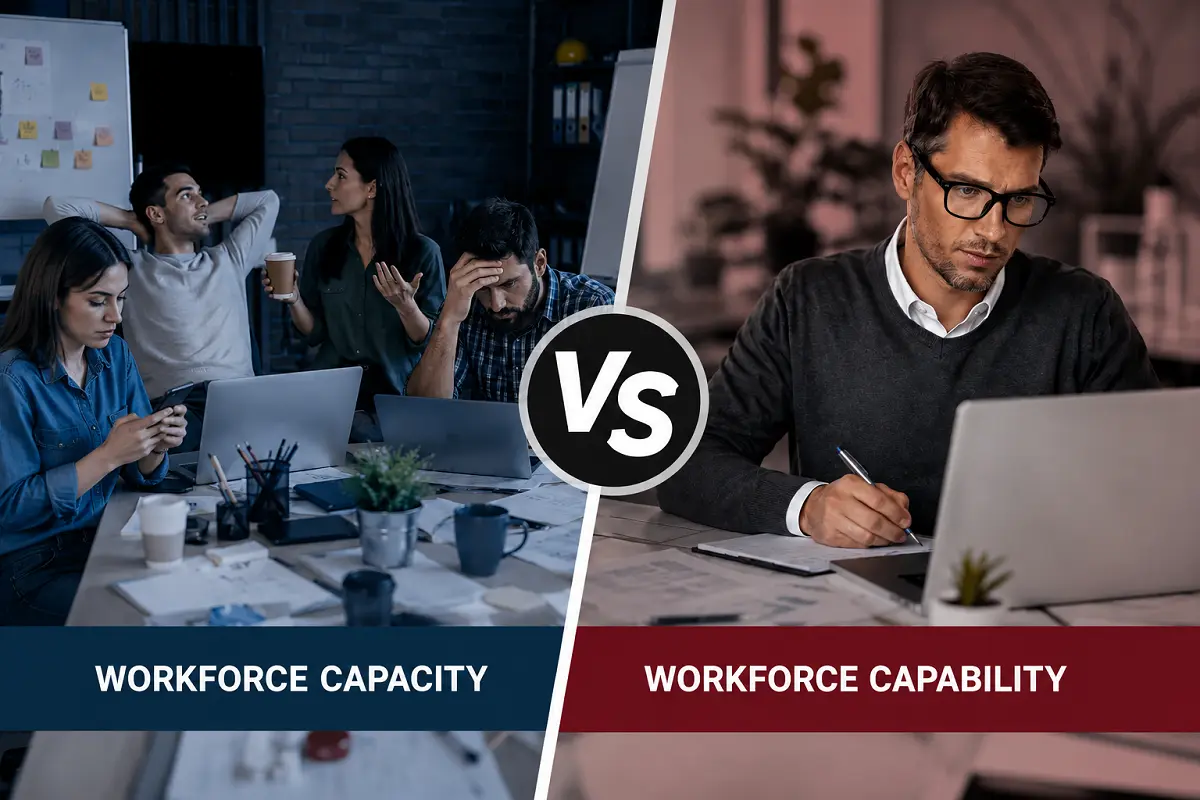
A business can have plenty of employees and still struggle to get work done. It can also have highly skilled employees who are unable to meet demand due to insufficient staffing.
This is where the workforce capacity vs capability distinction becomes important.
Workforce capacity refers to how much work your team can handle. Workforce capability refers to whether your employees have the skills, knowledge, and experience needed to do that work effectively.
The two concepts are connected, but they are not the same. A company may have enough workers to complete a project but lack the right skills. Another business may have highly capable employees but not enough people to handle its workload.
Understanding both is essential for productivity, growth, employee well-being, and long-term business success. For Canadian employers facing changing labour demands and evolving skill requirements, effective workforce planning can help maintain the right balance.
In this guide, we compare workforce capacity vs capability, explain why both matter, and show how Canadian businesses can build stronger teams.
What Is Workforce Capacity?
Workforce capacity refers to the amount of work a team or organization can realistically complete within a specific period.
It is influenced by the number of available employees, their working hours, shift schedules, workload distribution, and the level of demand the business faces.
For example, a warehouse may have 20 employees scheduled for a normal workload. During the holiday season, order volumes may double. The team may still be working efficiently, but its existing capacity may no longer be enough to handle the additional demand.
Factors that affect workforce capacity include:
- Number of available employees
- Working hours and shift schedules
- Employee availability
- Workload distribution
- Absenteeism and turnover
- Seasonal demand
- Overtime limits
Capacity is essentially about how much work your workforce can handle.
What Is Workforce Capability?
Workforce capability refers to the skills, knowledge, qualifications, experience, and behaviors employees bring to their roles.
A team may have enough people available, but if those employees lack the required capabilities, productivity and quality can still suffer.
For example, a manufacturing company may have enough employees on the production floor. However, if only a few workers know how to operate specialized machinery, the company’s actual capability may be limited.
Workforce capability can be influenced by:
- Technical skills
- Professional certifications
- Industry experience
- Problem-solving ability
- Communication skills
- Leadership ability
- Adaptability
- Knowledge of new technologies
Capability is about what your workforce can do.
Workforce Capacity vs Capability: Key Differences
| Factors | Workforce Capacity | Workforce Capability |
| Main focus | Amount of work the team can handle. | Skills and abilities available. |
| Key question | Do we have enough people? | Do we have the right skills? |
| Influenced by | Staffing levels, hours, shifts, demand. | Training, experience, qualifications. |
| Common problem | Too much work and too few workers. | Enough workers but insufficient skills. |
| Typical solution | Hiring, scheduling, temporary staffing | Training, upskilling, skills-based hiring. |
| Business impact | Delays, overtime, burnout. | Errors, quality issues, skills shortages. |
Why Canadian Employers Must Balance Workforce Capacity and Capability
Businesses need both enough employees and the right skills to operate effectively.
Better Productivity
When staffing levels match workload, and employees have the right skills, teams can complete work more efficiently.
Reduced Employee Burnout
A capacity shortage often forces employees to work excessive overtime. Over time, this can lead to fatigue, stress, and burnout.
Improved Project Delivery
The right balance helps businesses meet deadlines and maintain consistent service levels.
Better Customer Satisfaction
When teams have enough capacity and capability, customers are less likely to experience delays, errors, or poor service.
Lower Turnover
Employees are more likely to become frustrated when they are constantly overworked or expected to perform tasks without proper training.
Greater Operational Efficiency
Businesses can reduce wasted time, improve resource allocation, and make better workforce decisions.
Stronger Business Growth
A workforce that can scale with demand gives organizations more confidence when taking on new projects, customers, or contracts.
Signs Your Business Has a Workforce Capacity Problem
A capacity problem usually means the business lacks sufficient available labour to manage its workload.
Common signs include:
- Frequent overtime
- Missed deadlines
- High absenteeism
- Delayed production
- Excessive temporary hiring
- Employee burnout
- Declining customer satisfaction
Signs Your Business Has a Workforce Capability Gap
A capability gap exists when employees are available but lack the skills needed to perform certain tasks effectively.
Warning signs may include:
- Poor work quality
- Repeated errors
- Skills shortages
- Low innovation
- Safety incidents
- High training requirements
- Difficulty adopting new technologies
How to Improve Workforce Capacity
Businesses can improve workforce capacity through several practical strategies.
Forecast Labour Demand
Review historical workload patterns, seasonal changes, upcoming projects, and expected growth to identify future staffing needs.
Hire Temporary or Contract Staff
Temporary and contract workers can help businesses manage seasonal demand, unexpected vacancies, and short-term increases in workload.
Optimize Shift Scheduling
Better scheduling can help businesses make the most of their existing workforce while reducing unnecessary gaps and overtime.
Reduce Unnecessary Overtime
Overtime may solve short-term capacity problems, but excessive reliance on it can increase costs and contribute to employee burnout.
Partner With a Staffing Agency
A staffing partner in Canada can provide access to workers when businesses need to increase capacity quickly.
Cross-Train Employees
Cross-training enables employees to perform multiple responsibilities, creating greater flexibility when staffing levels change.
How to Strengthen Workforce Capability
Improving capability requires a focus on skills and long-term development.
Upskilling and Reskilling
Training employees in new technologies, processes, and responsibilities helps organizations prepare for changing business needs.
Use Skills-Based Hiring
Rather than focusing only on job titles or traditional qualifications, employers can evaluate candidates based on the actual skills required for the role.
Develop Future Leaders
Leadership development programs can help organizations build internal talent for future management and supervisory roles.
Encourage Mentoring
Experienced employees can help transfer knowledge and practical skills to newer team members.
Support Continuous Learning
Workshops, certifications, training programs, and professional development can strengthen workforce capability over time.
Hire Experienced Professionals
When businesses need specialized skills immediately, hiring experienced professionals can help close capability gaps faster.
Conduct Regular Performance Evaluations
Performance reviews can help identify strengths, skill gaps, training needs, and development opportunities.
The Role of Staffing Agencies in Balancing Workforce Capacity and Capability
Staffing agencies can help employers address both sides of the workforce challenge.
They can help businesses fill urgent vacancies quickly when capacity is limited. At the same time, specialized recruitment services in Canada can connect employers with candidates who have the skills and experience needed to address capability gaps.
This can help organizations:
- Fill urgent vacancies.
- Access specialized talent.
- Scale the workforce based on demand.
- Reduce recruitment time.
- Improve workforce flexibility.
- Support long-term workforce planning.
Hire Labour supports Canadian employers across industries including technology, finance, administration, legal, human resources, marketing, government, construction, manufacturing, logistics, and engineering.
Whether a business needs temporary labour to manage a seasonal increase or experienced professionals for specialized roles, the right staffing strategy can help create a more balanced workforce.
Conclusion
Understanding workforce capacity vs capability differences is essential for effective workforce planning. While workforce capacity focuses on having enough employees to meet business demand, workforce capability ensures those employees have the right skills, knowledge, and experience to perform their roles effectively.
By balancing the number of employees with the right skills, employers can improve efficiency, reduce workforce challenges, and support long-term growth.
Need Help Finding the Right Talent?
Whether you need temporary staff or skilled professionals, HireLabour.ca connects Canadian employers with qualified talent through flexible staffing solutions.
Contact us today to build a workforce with the right balance of capacity and capability.
FAQs
How often should employers assess workforce capacity and capability?
Employers should regularly review workforce capacity and capability, particularly before seasonal demand increases, major projects, business expansion, or significant changes in technology or operations.
Can a business have high workforce capability but low workforce capacity?
Yes. A business may have highly skilled employees but not enough people to handle its workload. This can lead to excessive overtime, delays, and employee burnout.
Which industries benefit most from workforce capacity planning?
Industries with changing workloads or labour-intensive operations, including construction, manufacturing, logistics, warehousing, healthcare, technology, and engineering, can benefit significantly from workforce capacity planning.
How can staffing agencies support long-term workforce planning?
Staffing agencies can help businesses identify staffing needs, access qualified talent, fill temporary gaps, recruit specialized professionals, and build a more flexible workforce strategy.